“Would I actually want to stop here?”
That’s one of the first questions I ask when I’m considering a food or retail business as a potential Rangeway partner.
It sounds like a casual question, but it covers a lot of ground quickly.
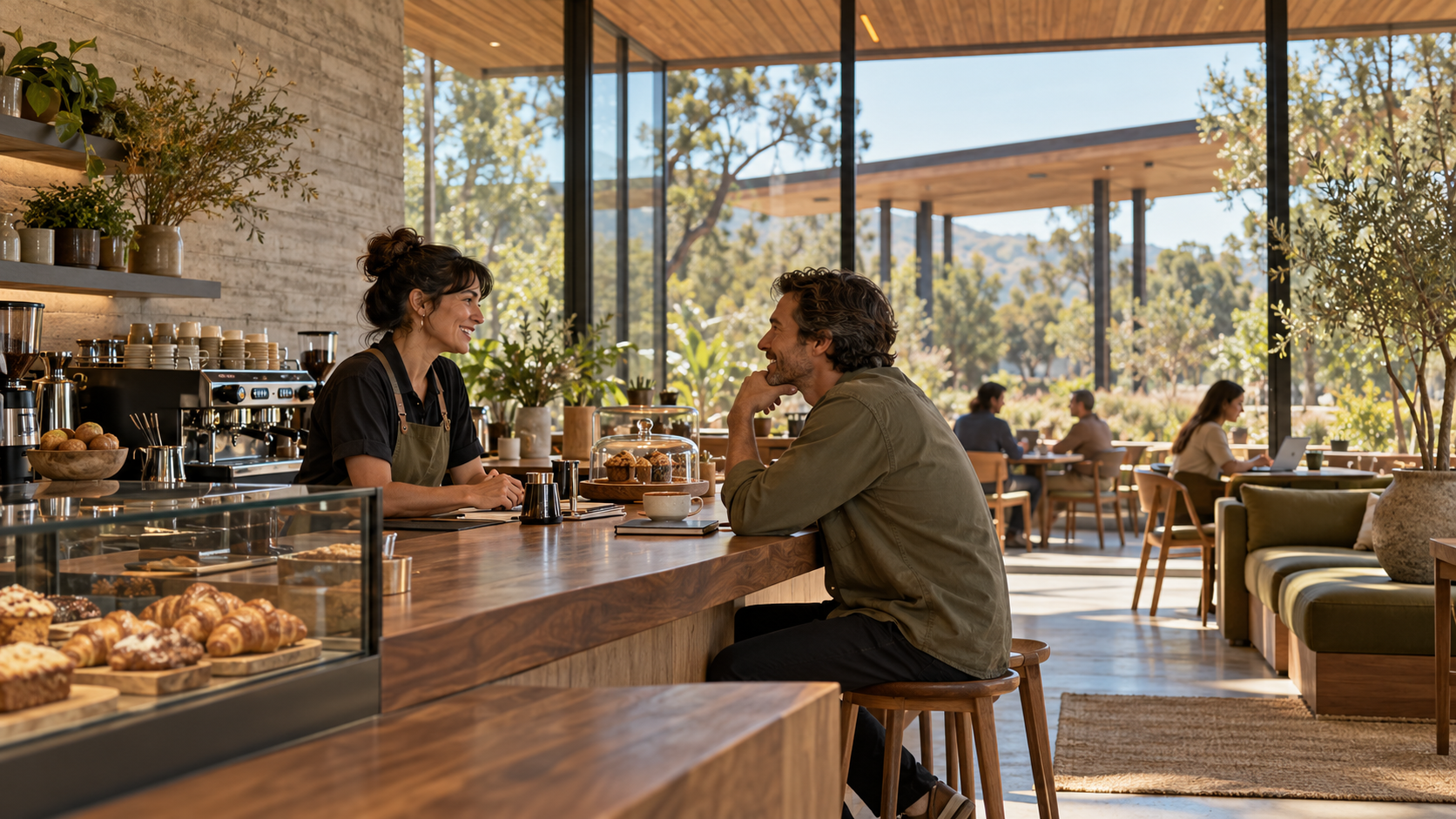
When I walk into a place, I’m reading whether it feels welcoming, whether the people running it care about what they do, and whether the coffee or the food is something I’d be excited to come back for.
I can’t point to one moment that trained that read. It came from working at different properties throughout my hospitality career. Over time you start to notice the difference between a place that is just operating and one where people take pride in what they provide. It comes through in how guests are treated, how the space is maintained, and whether the details have been thought through.
From there, the practical questions start. Is the business open when drivers are likely to arrive? Can someone get what they need and enjoy it without feeling rushed? Does the team have the capacity to serve travelers alongside their regular customers?
The First Conversation
If a place feels right, the next step is a conversation with the people running it. I pay attention to how the owner talks about their customers and their business.
A few things tell me a lot:
- Curiosity about their guests. Are they interested in who comes through the door and what those people actually need?
- Honesty about their own operation. Can they talk honestly about what works, what doesn’t, and how they handle it when something goes wrong?
- The quality of their questions. Do they ask about the location, the guests, the hours, and what it takes to run their business there?
That last one matters most. I don’t expect anyone to have every answer in a first conversation. I’m looking for a person who is thoughtful about the questions and wants to figure out the answers together.
Local Is Part of the Conversation
It would be easy to assume a hospitality-first charging network will default to local businesses. There is real appeal there, and I want to be honest about it.
A local operator can bring a genuine connection to the community. They can offer travelers something they won’t find at every other exit. When a stop includes the café locals actually recommend, the place where they take out-of-town visitors, that distinctiveness is valuable. We want it where we can find it.
Being local is a real strength, but it’s one factor among several.
The opportunity also has to work for the business itself. A local spot its regulars love may not have the hours, staff, or space to serve travelers as well. That doesn’t rule it out. It means we need to work out together whether a Rangeway location would help their business grow or stretch it too thin.
The same honesty applies in the other direction. I wouldn’t rule out a national chain. If a recognizable brand wants to be part of a Rangeway location, shares our approach to hospitality, and the numbers work for both of us, I’m open to that conversation. A familiar name can solve real problems for a traveler at 6am.
What I don’t want to do is assume a recognizable name automatically makes a business the right fit, or that a local address does. We still have to look at the space they need, their operating hours, how they treat guests, and whether the location gives them enough business to justify the investment.
The real question is whether we can build something that works for the operator, for Rangeway, and for the people stopping there. It has to keep working long after opening day.
One Stop, Separate Businesses
A Rangeway stop with a food or retail partner involves two businesses sharing one property. Rangeway brings the location, the charging infrastructure, and the common areas. The partner brings their business, their staff, and their products. The guest experiences all of it as one stop.
Who owns what has to be clear before there’s a problem. That clarity is harder to establish after something breaks at 9pm on a Friday.
I want to be careful here, because we are still developing our first locations and I don’t want to pretend we’ve settled every detail. Rangeway would generally be responsible for the charging operation and the shared spaces. The partner would be responsible for their own business, including their products, staff, and service. The exact division will depend on the location and the agreement.
What I hold firm on is the guest’s side of it. Each of us runs our own business, but when a guest has a problem, it belongs to both of us. They shouldn’t have to figure out whose contract covers it or get passed back and forth. Whoever they speak to should help them reach the right person, and we should make sure it gets followed through. Problems will happen at any stop. How both businesses respond is what the guest remembers.
Shared values matter, and I want partners who hold them. Talking through specifics is how we find out what those values mean day to day.
The conversation I want to have before opening is built around real situations:
- A guest has a problem with their charging session while they’re inside the café. What does the café team do?
- Something goes wrong with the food service. How does Rangeway help the guest without getting in the operator’s way?
- Who gets the first call, and who follows up?
I’d also want to talk about the less dramatic things: hours, keeping shared spaces clean, communicating changes, and what happens if the business isn’t getting the traffic it expected. Those are the details that could put strain on a relationship if we haven’t discussed them.
I wouldn’t expect a food operator to become a charging technician, and I wouldn’t expect Rangeway to tell anyone how to run their kitchen. What I would want is for us to agree on how we communicate and how we help a guest when a problem crosses between our businesses.
That conversation tells me more than simply hearing that we share the same values. It turns alignment into something both teams can act on when a guest needs help.
Learning the Community
Some of this is still unproven, and I’d rather say so plainly.
Rangeway is developing its first locations. I have a clear thesis about how food and retail partnerships should work at a charging stop, shaped by my own background in hospitality. We do not yet have years of operating history proving it.
I don’t think you can learn everything about a market from behind a screen. Data tells us who lives nearby, how many people travel through, and what businesses already exist. It won’t tell us which café locals are proud of or what’s missing at that exit. For that, I’d want to spend time in the area, visit businesses, and listen to people who know the community better than we do.
Sometimes that means finding a food or retail partner for a Basecamp. Sometimes it means adding charging to an existing local business through ChargeVia. In both cases, the person running that business understands their customers and community in ways we’re still learning. That’s a big part of why their perspective matters.
A Partnership Worth Keeping
Five years from now, if we’ve gotten this right, the relationships will feel like we’re genuinely in it together. The operator knows the people at Rangeway and we know them. We talk regularly, share what guests tell us, and work through problems before they grow. Their business does well because the location works for them, not because they’re doing us a favor by being there.
I’d also want them to feel comfortable telling us when something isn’t working, or when they see an opportunity we’ve missed. If we get that right, both sides will want to keep working together, and guests will feel the care that goes into the stop, even if they never know the conversations that happened behind it.