Paren’s Q3 2026 report on the U.S. fast-charging industry is worth reading closely. The network has crossed 80,000 DCFC ports for the first time. National utilization held at 15.9%. The reliability index sits at 93.9. Charging sessions reached a record 50.4 million in the quarter, peaking at 17.6 million in July.
Tom Moloughney’s guest essay in the same report identifies what the next stage of progress requires: public charging that works for people who have no interest in troubleshooting equipment or becoming experts in charging networks. His standard is arriving, plugging in, and getting on with your day without angst. That is a standard the industry should hold itself to.
Tom’s emphasis on confidence connects directly to a question we’re exploring at Rangeway: once drivers have reliable options, what makes them prefer one stop and return to it?
Utilization, as Paren measures it, cannot answer that question. Understanding why matters for how operators evaluate progress.
What Utilization Measures
Utilization captures the share of tracked time a charger is actively in use. At 15.9% nationally, it tells us the network is being used. It does not tell us why a driver selected a given stop, whether they had a practical alternative, or whether the experience gave them a reason to return.
Those gaps are not a criticism of Paren’s methodology. Utilization is a meaningful operational metric. The question is what conclusions it can and cannot support.
Miami offers a useful illustration. The metro’s utilization fell from 30.5% to 28.4% while its port count grew 8%. Paren notes that the added capacity may be easing wait times. If that’s the case, a driver arriving to find an available port immediately rather than waiting for one to open represents a real improvement in the experience. The metric moved in one direction while the quality of the stop may have moved in another.
That possibility doesn’t indict utilization as a measure. It illustrates that a utilization figure, on its own, doesn’t tell an operator whether their location is serving drivers well. A quarterly metro average can’t distinguish between a stop where drivers waited fifteen minutes and one where they pulled straight in. It can’t tell you whether the driver who just left plans to use that stop again.
The Question Utilization Can’t Reach
A driver can prefer a stop for several reasons. Price, reliability, layout, and convenience can all earn a first visit and a repeat one. The behavior we particularly want to understand is deliberate return: choosing a stop again because of a previous positive experience when a practical alternative exists.
Repeated use can reflect convenience, confidence in the equipment, satisfaction with the wider stop, or limited alternatives. Several of those reasons can overlap. Utilization alone cannot tell us which influenced the decision.
In our preliminary driver study, respondents reported intentionally returning to charging locations after positive experiences. That gives us a reason to investigate what earns a return visit, while leaving open how much hospitality, reliability, convenience, and available alternatives each influence that choice.
The question we want to investigate is what influences selection when a driver has two reliable, similarly priced options.
What an Operator Has to Account For
Tom’s framework asks whether charging works without angst. The operational question underneath that is: who is responsible for ensuring it does?
An infrastructure-focused site evaluation asks about power availability, traffic counts, access, installation cost, and projected charging demand. Those are necessary inputs. Rangeway answers all of them.
A hospitality-oriented evaluation follows the driver through the actual stop. Where do they pull in? Can they read the layout immediately on arrival? How far is the restroom, and is it accessible when they need it? What happens if they arrive after nearby businesses close, or if they have children with them, or if the weather is bad?
Those questions can change a site decision. “Restrooms nearby” is a location attribute. Knowing when those restrooms are available, who cleans them, and what happens when they’re out of service requires an operating plan. That plan can affect the layout, the host agreement, the budget, or whether a property is the right fit at all.
It also clarifies whose work is part of the charging experience. A session can complete successfully alongside a locked restroom or a facility that hasn’t been serviced. The driver experiences the whole stop, regardless of which company is responsible for each piece.
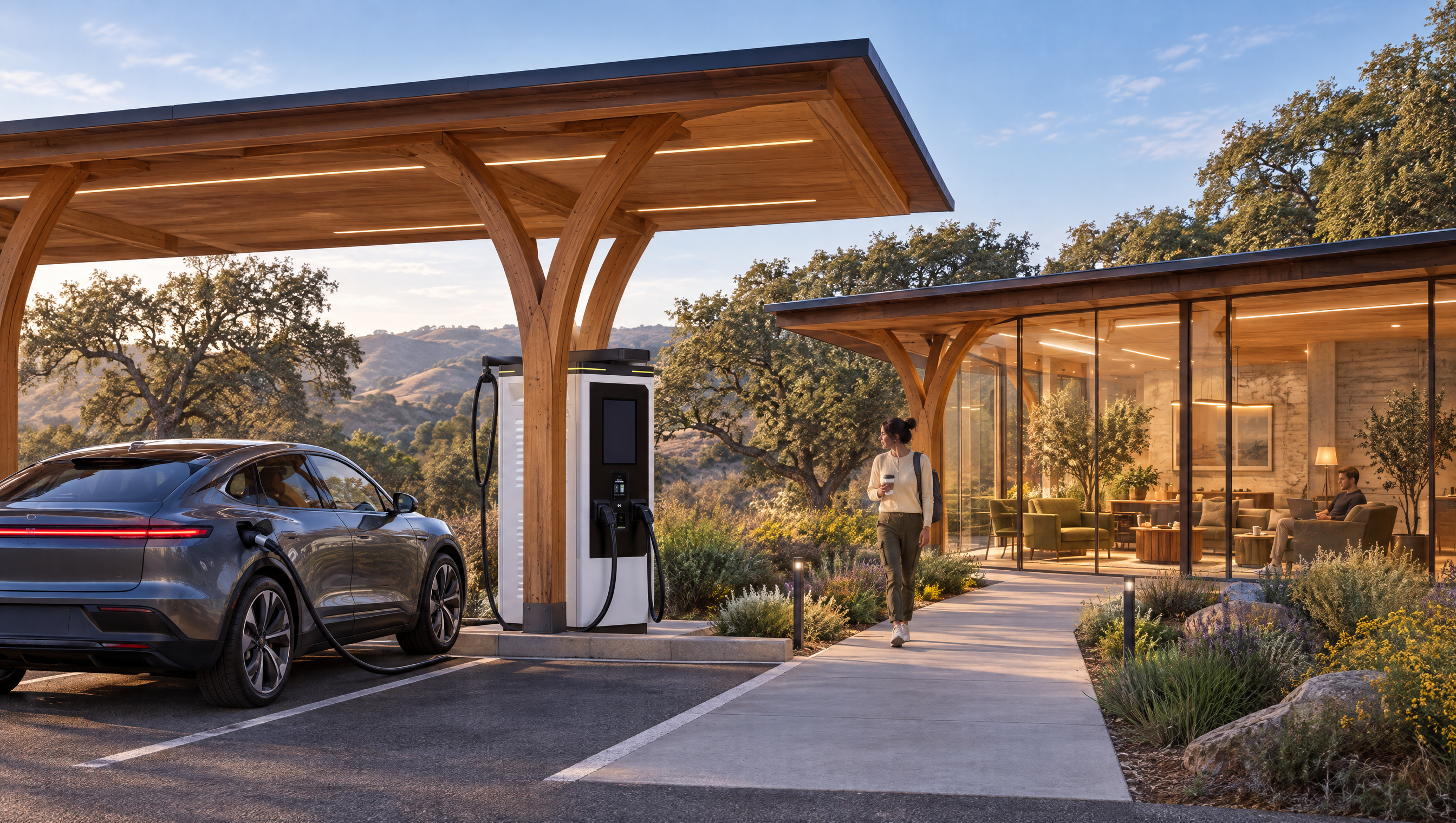
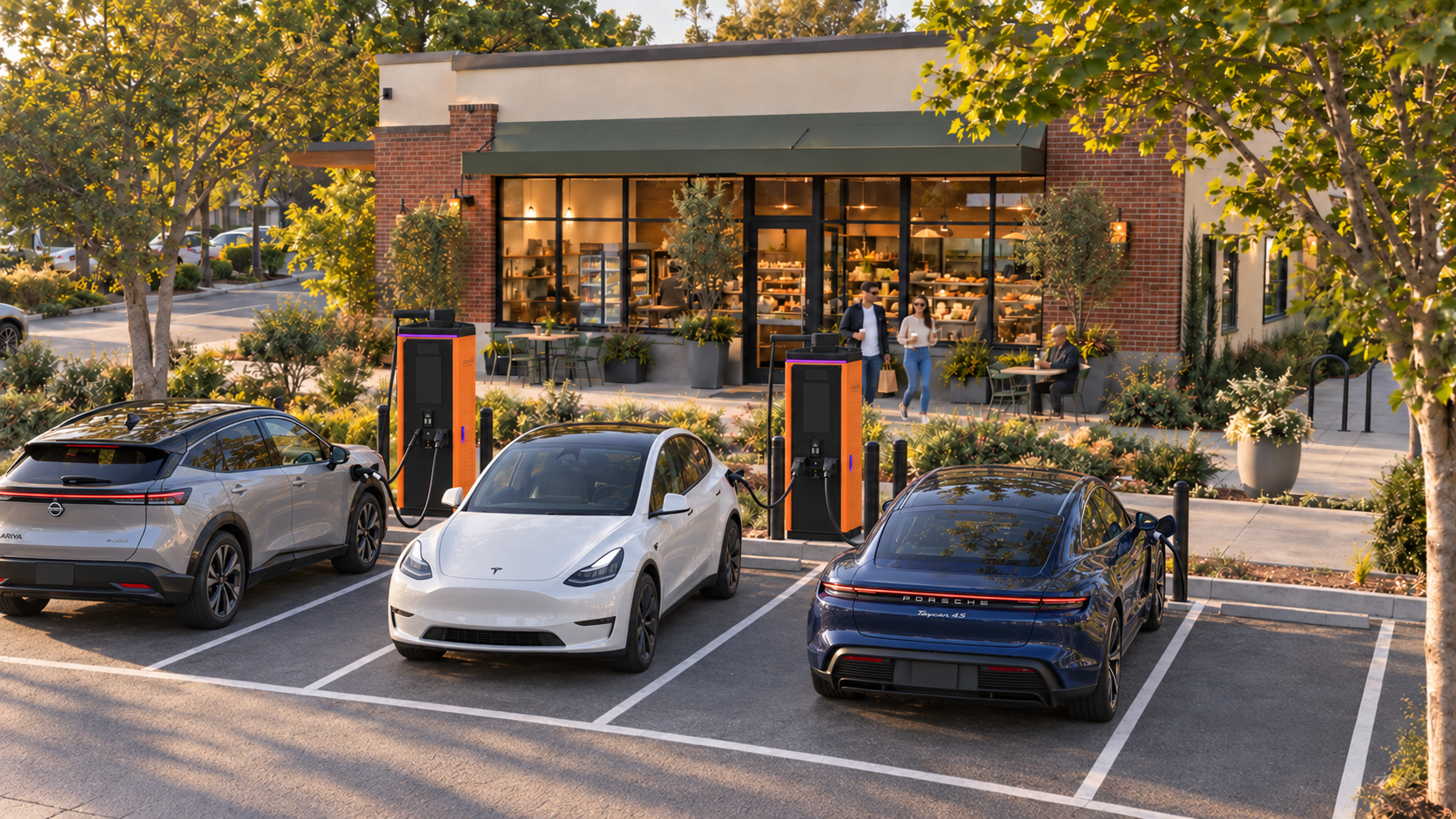
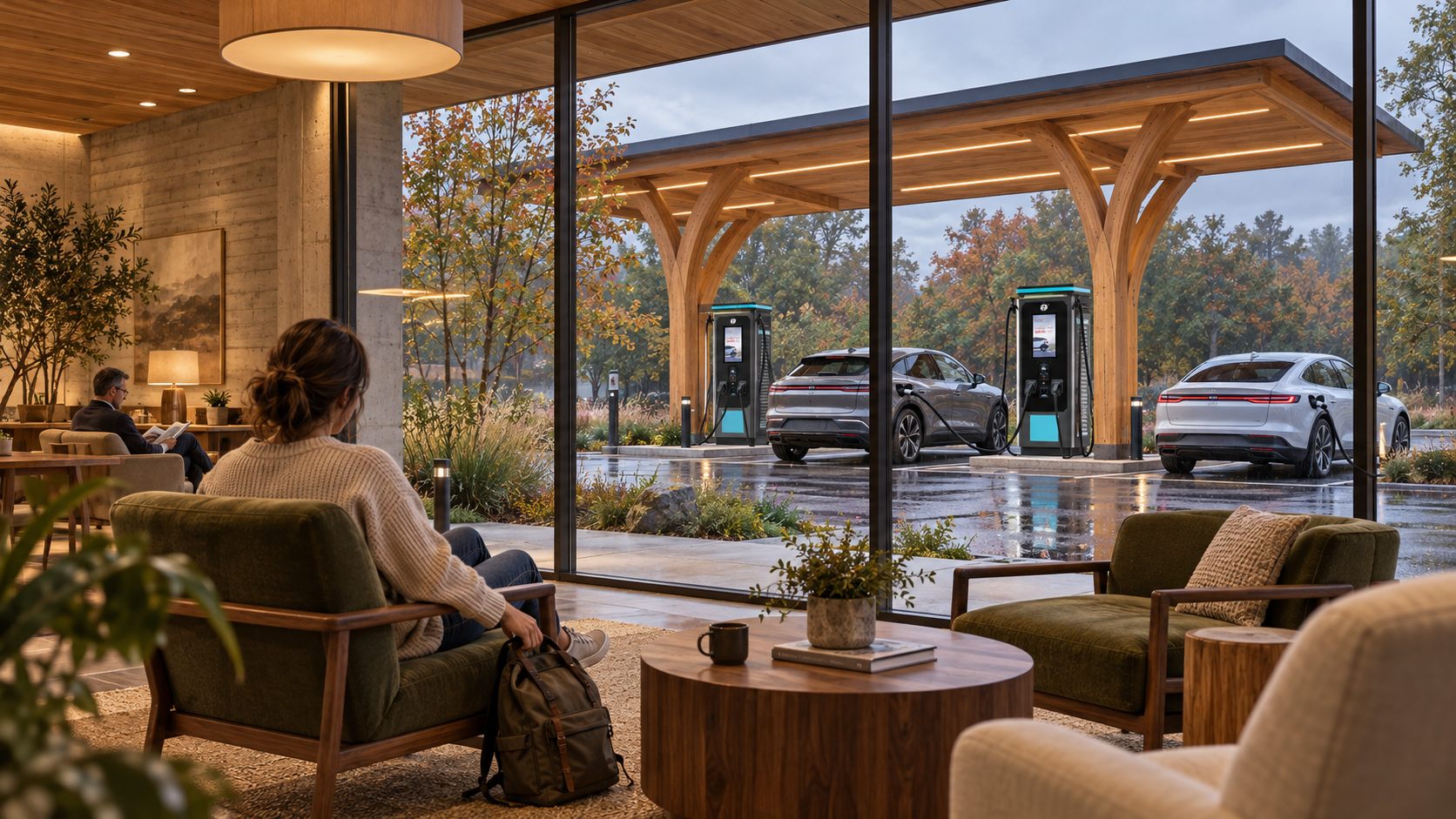
How Rangeway assigns those responsibilities depends on the format. ChargeVia by Rangeway integrates charging into an existing host property, and what we can offer a driver there has to reflect what that host and Rangeway can reliably deliver together. Waystations are automated and unstaffed, with indoor comfort and amenities supported by a defined operating plan. Basecamps are staffed destinations with a larger driver’s lounge and locally operated food-and-beverage or retail. Each format carries different obligations. We are developing the operating models to meet them.
What the Paren Data Doesn’t Settle
The Q3 2026 report documents real progress. The network is larger. Newer stations are bigger. High-power charging has expanded substantially: 73% of new ports are rated at 250 kW or above, up from 60% a year ago. National reliability held essentially steady at 93.9, but 29 of 52 states and territories declined year over year. Meanwhile, 50 of 52 scored at least 90. Those are different findings and both matter. Recorded charging sessions increased 26% compared with Q3 2025.
What this report does not establish is whether drivers are developing preferences among the stops available to them, and what drives those preferences. That’s not a gap in Paren’s methodology. It’s a different research question, one that requires tracking individual behavior over time and understanding the alternatives each driver had access to.
Tom’s “without angst” standard is where the industry needs to arrive. The question Rangeway is organized around is what comes after: whether a stop can be worth the time in a way the driver remembers and acts on when they plan their next trip.
What Rangeway Still Needs to Prove
Our conviction is that the whole stop matters: the restroom, the shelter, the layout, the amenities available during the time the driver is there. What remains to be demonstrated is whether that experience changes actual behavior enough to support the cost of delivering it consistently.
Drivers may value clean facilities and comfortable surroundings without changing where they charge. Price, route convenience, and navigation recommendations may dominate the decision regardless of experience quality. Our driver research gives us a reason to keep investigating. It doesn’t settle the question.
One question we intend to investigate as locations come online is whether drivers deliberately return when they have a comparable alternative. That needs to be assessed alongside utilization, energy delivered, wait times, and site economics. A location that earns repeat visits also needs to sustain the experience that earned them.
Operating knowledge and driver trust are advantages we intend to earn. They are not assets we can claim yet. The Paren report describes an industry building the infrastructure for a category that is still deciding what it values. We’re building Rangeway around a specific answer to that question. The early locations will tell us how well we got it right.