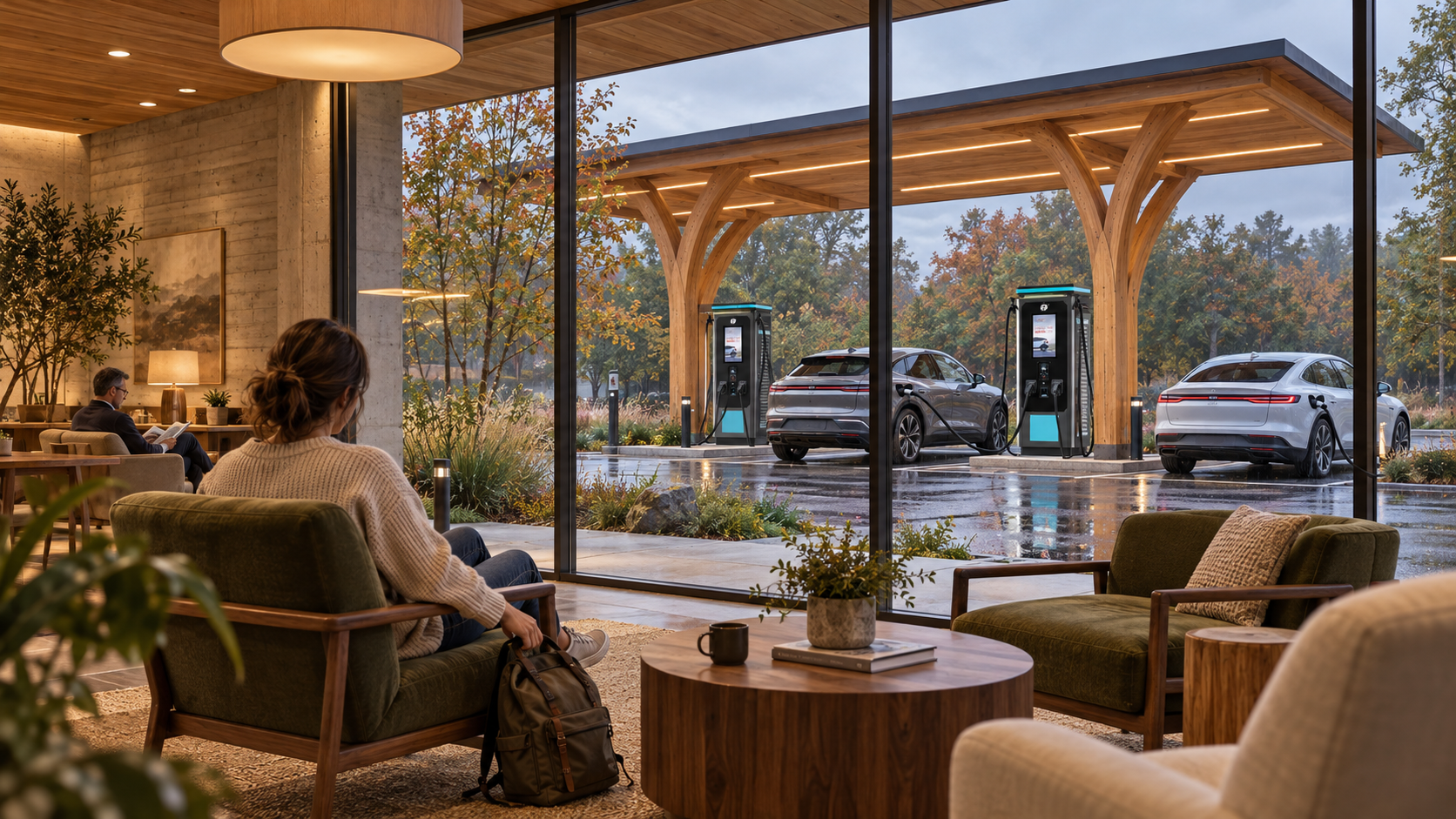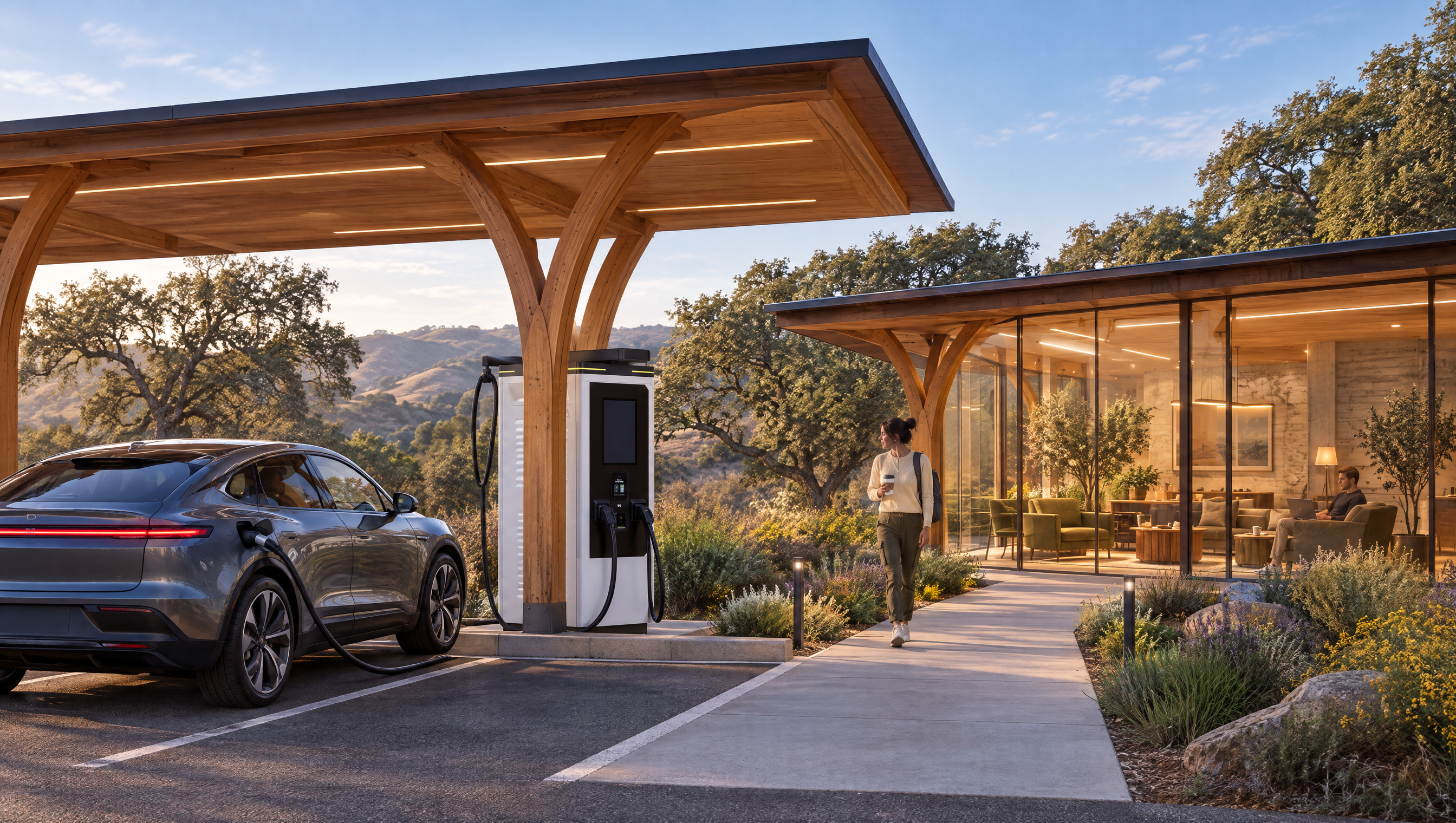
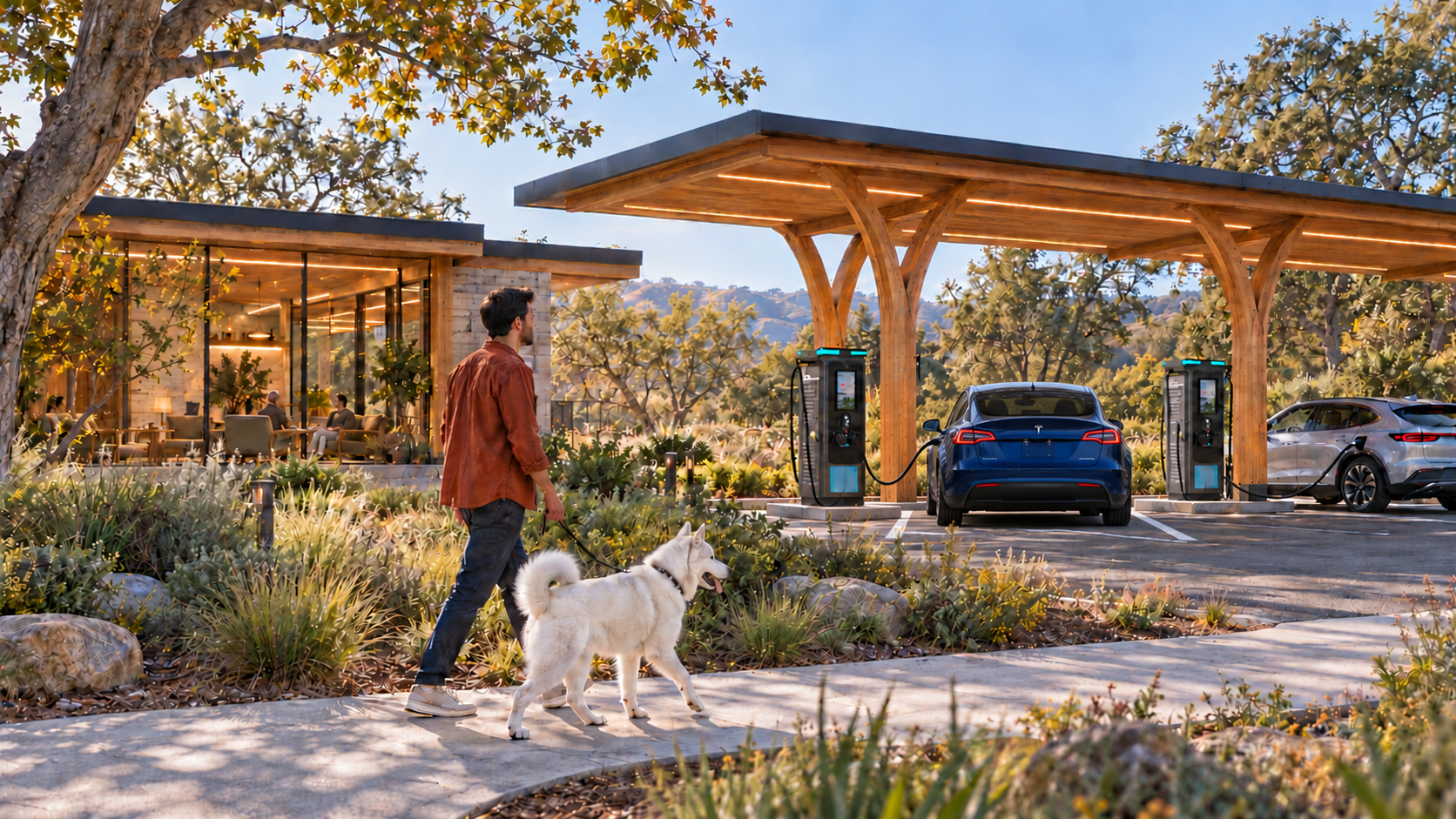
There is a stop in Santa Nella, California, that I plan around. The charging is reliable, the bathroom is clean, and Starbucks, McDonald’s, and In-N-Out are within walking distance. The hotel property has a dog park and pleasant surroundings. Heading to LA, it falls about two and a half hours into my drive. Coming home, it’s my last stop.
I kept stopping there after switching from a Tesla Model Y to a Rivian R1T. Having both a Supercharger and a Rivian Adventure Network station made that possible. The location and amenities gave me reasons to keep choosing it. It is one of several stops that has become part of my routine because it works.
That experience was on my mind while listening to Tom Moloughney’s October 2026 State of Charge interview with IONNA CEO Seth Cutler. The conversation marked IONNA’s roughly 200-location milestone, but the more interesting discussion concerned what those locations offer and why drivers would choose them.
Cutler described a network pursuing quality and scale together. His answers also exposed the practical tensions between those ambitions: how drivers discover a location, what persuades them to try it, which amenities a property can accommodate, and how broadly the fuller experience can be delivered.
Getting Chosen Before the Driver Arrives
When Moloughney asked about attracting Tesla drivers, Cutler identified three areas: affordable pricing, built-in navigation, and Plug & Charge. He said IONNA was working on those barriers, without announcing specific integrations.
That is a useful starting point for anyone building a hospitality-focused charging business. A driver has to see the location as a practical option before its facilities can influence their experience.
My own choices reflect that constraint. An extra five dollars for a charging session wouldn’t bother me at a stop I prefer. A ten-minute detour would push me toward something more convenient. Those are my personal thresholds, but they explain why Santa Nella works so well for me. It fits the drive, and I like spending my break there.
I also bypass Firebaugh for stops such as Buttonwillow or the Tejon Ranch Outlet Mall. Those choices involve deciding where to stop along the route. They don’t require me to leave it substantially. Sometimes I’m choosing a place I actively enjoy; sometimes I’m choosing the better of the available options.
Hospitality can influence which practical stop I choose. It still has to work with the location, charging reliability, and ease of using the service.
A Discount Can Earn a Trial. What Earns the Return?
Cutler said IONNA’s holiday pricing promotions produce increases in utilization and that customers come back afterward.
That suggests promotions can give drivers a reason to try an unfamiliar network. The interview leaves open what happens next. It does not quantify retention or establish whether returning customers are responding to price, convenience, reliable charging, amenities, or some combination.
The distinction matters because the first visit gives the operator an opportunity to become part of the next decision.
At a familiar stop, I already know where the restroom is, what food is available, and whether the location works for the break I want. That knowledge saves me from solving the same questions on every trip. The facilities themselves make the time useful once I arrive.
Our preliminary driver survey gives us reasons to investigate that relationship. Respondents reported returning to charging locations after positive experiences. Reliability, charging speed, clean restrooms, and price were prominent charging-stop priorities. In responses to a proposed destination concept, restrooms, food and beverages, and purpose-built design stood out.
Those findings help frame the question. Actual choices over time have to establish which parts of the experience earn a return.
How Much of the Network Delivers the Fuller Experience?
Cutler put useful numbers around IONNA’s current offering. About 25% of its roughly 200 sites had canopies. Roughly 10%, possibly fewer, had amenities IONNA built itself.
The second figure needs context. Other locations provide access to restrooms, food, and services through host businesses. It does not mean the remaining sites offer drivers nothing beyond charging.
It does, however, distinguish the fuller IONNA-built experience from the broader network. Cutler described more extensive locations coming in California and Dallas, including markets, shelter, and places to spend time during the stop.
That direction is worth watching alongside the pace of expansion. A network can open more locations with dedicated amenities while those locations remain a small share of its total footprint. The interview does not establish how that proportion will change.
For a driver, the practical question is where that experience is available along their route. A flagship can show what an operator is capable of delivering. Building a preference around it also depends on whether the driver can find and conveniently use a location offering what they value.
Santa Nella has become dependable for me because I repeatedly travel that route. One useful location can matter a great deal to an individual driver. A network serving many different journeys faces a broader challenge.
The Property Determines What Is Possible
The interview’s pull-through discussion makes that challenge concrete.
Cutler acknowledged that he wanted more pull-through stalls. Existing retail properties can limit the space available for circulation and charging layouts. Sites developed more directly give IONNA greater freedom, but accommodating shelter, fast charging, and trailers together still requires choices.
Those constraints extend beyond towing. The property influences how far someone must walk to a restroom, whether the route is sheltered, and how comfortably a family can move through the stop.
This is where hospitality begins to affect development decisions. The intended visit has to inform property selection and layout. Otherwise, the operator may discover that an important part of the experience is difficult or expensive to provide.
Different formats can serve different needs. A hosted retail stop and a dedicated destination can both be useful. Drivers need clear information about what each offers so they can choose the one that fits their trip.
Delivering the Experience After Opening
Cutler’s emphasis on quality at scale raises another question: what keeps the experience dependable as the network grows?
Canopies and buildings are visible investments. Clean restrooms, maintained grounds, reliable equipment, and responsive support depend on recurring work. Someone needs responsibility, an inspectable standard, and coverage that reflects how heavily the property is used.
That applies to Rangeway’s plans as well. At a staffed Basecamp, the operating model needs people who can inspect conditions and respond throughout the day. At an automated, unstaffed Waystation, it needs physical inspections, cleaning, maintenance, and dependable local response coverage. The available service differs, and the promise must reflect that.
If we promise an experience, we need to fund the recurring work of keeping that promise.
We also need to test whether the result influences behavior enough to sustain its cost. If drivers appreciate the facilities but show no greater tendency to return when comparable alternatives exist, that would challenge our assumptions. If basic facilities do more of the work than elaborate features, we should be willing to simplify.
IONNA’s interview is useful because it brings these questions together. Expanding the network, attracting a first visit, developing more complete stops, and earning repeat use are related tasks. Progress on one does not settle the others.
The opportunity for Rangeway is to learn from those tradeoffs while proving our own approach. We want a stop that fits the journey, makes the break useful, and gives drivers a reason to choose it again.
A driver should leave having taken care of themselves and the people traveling with them, as well as the battery. Whether that experience earns a place in their next trip is the result we need to understand.