More of the conversation about EV charging has moved beyond kilowatts lately. Drivers and networks are talking about whether sites are kept up, whether the amenities work and how much the phone should be part of a charging stop.
Much of that conversation would sound familiar in a hotel operations meeting. Does the property look cared for? Do the things we provide actually work? Can guests find what they need without asking someone to explain it?
My hospitality career taught me to answer those questions before a guest arrives. They have shaped Rangeway from the beginning.
The Details Are Part of the Job
A windshield washing station is useful if it helps someone clean their windshield. Putting one beside a charger is only the first step. Someone still needs to choose a tool that works, keep the fluid filled and replace what wears out.
The same applies to landscaping, lighting, trash bins and restrooms. These details tell people whether a place is being looked after. A charger can deliver full power while the property around it gives a very different impression.
In hospitality, providing an amenity creates an obligation to maintain it. Good hotel operators walk the property, notice what a guest will notice and fix it before anyone has to complain.
Guest feedback still matters. Someone will notice something you missed, use a space differently than you expected or suggest an improvement worth making. Guests should not have to become the property’s inspection team.
We Started With a Different Question
We weren’t simply asking where we could install chargers. We were asking what kind of place someone would arrive at, how they would spend their time there and what would make them choose to return.
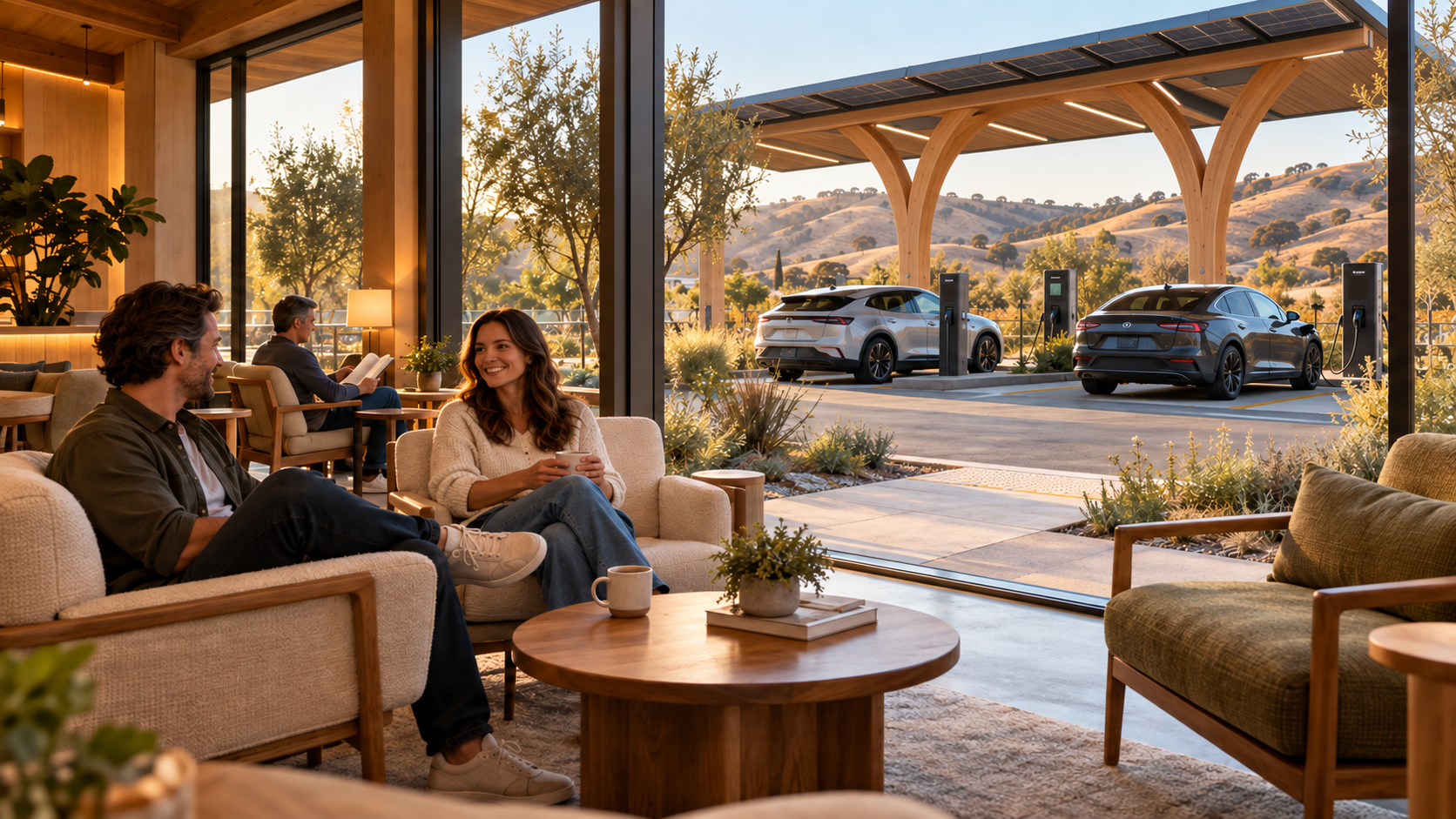
The driver’s lounge, restrooms, food options and charging layout grew out of that thinking. They were part of the original concept, not additions we would consider once enough drivers asked.
Useful Before Impressive
Our driver study gave us a way to test the thinking behind Rangeway against how people describe their own charging stops.
Reliability, charging speed, clean restrooms and price came up again and again. Food and beverages mattered, too. Respondents described using the restroom, buying something to eat or drink, walking around and caring for children or pets while their cars charged.
Those are ordinary needs during a road trip. They deserve deliberate attention.
The research also kept us honest about what people value. Seating, staffing and Wi-Fi were not the leading priorities. We cannot assume that a comfortable lounge, by itself, will overcome unreliable charging or justify a higher energy price.
For Rangeway, that means hospitality has to be useful. The charging needs to work. The restroom needs to be clean. The stop needs to make sense along the route. A welcoming space should improve that experience, not become an excuse to neglect the essentials.
Respondents also described returning to charging locations after good experiences. That is familiar territory for anyone who has worked in hotels. Giving people a reason to come back is the business.
The Same Thinking Applies to the Phone
Being app-free has been part of our plan from day one.
Showing someone their charging progress without another download is useful. The broader question is how much work we are asking the guest to do. They have already found the location, parked and plugged in. We should be making the next few minutes easier, whether they want to check their session, find something to eat or see what is available nearby.
That thinking also shapes the work we are doing with a technology partner on guest recognition. We want to acknowledge repeat visits and make them worthwhile without turning another app into the price of admission. That work is still in development, but the intention has been consistent: technology should support the visit without becoming another task.
Looking After the Person Arriving
More listening is good for everyone who drives electric, and I’m glad to see the industry moving toward drivers.
Rangeway is rooted in hospitality because I have spent my career thinking about the person arriving, not just the equipment serving them. Listening to drivers will help us improve what we build. It does not need to introduce us to the idea of looking after them.
That’s why we say, “Travel farther. Stop better.” A good charging stop should leave you ready to continue your trip, and glad you chose to stop there.