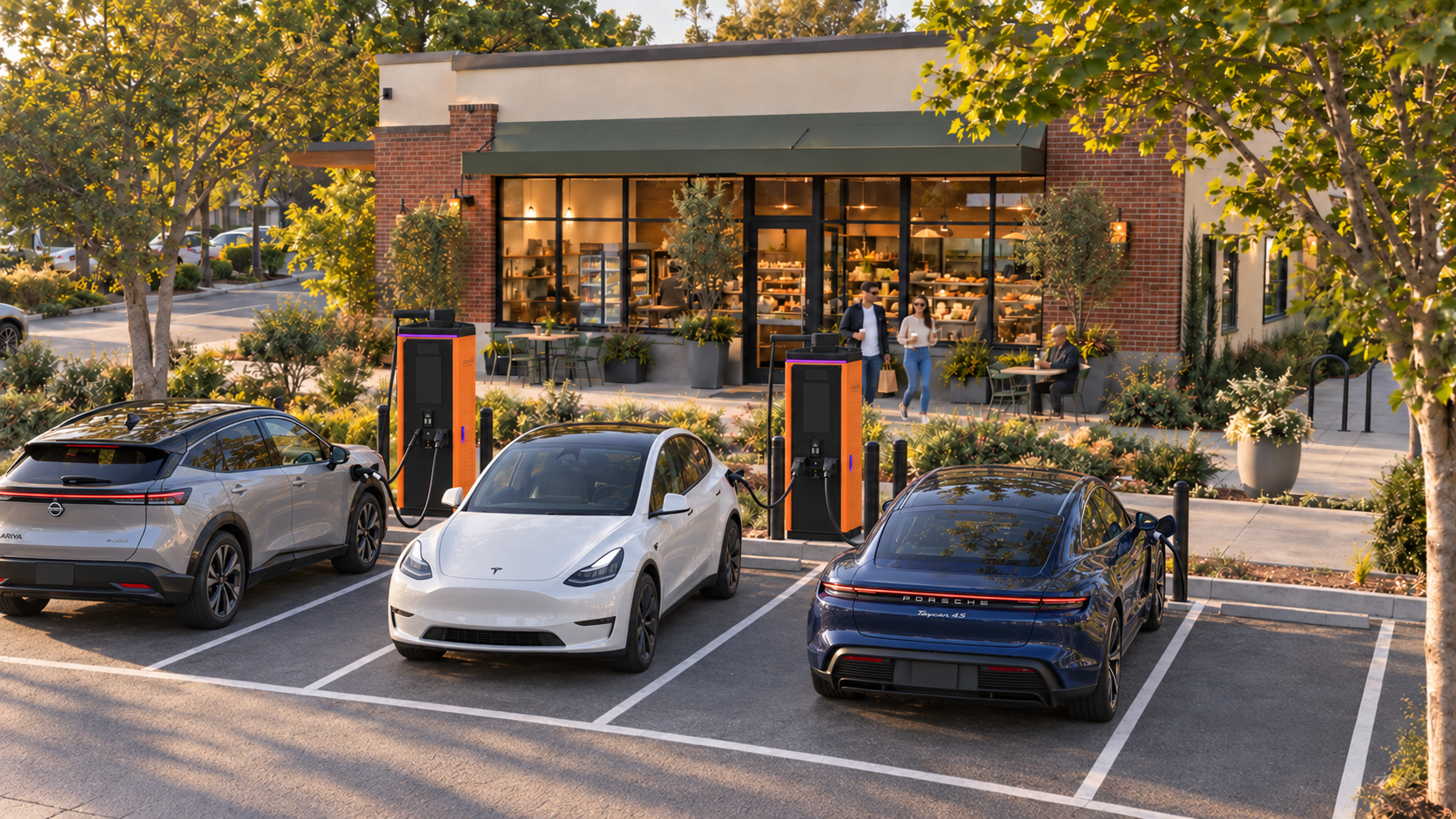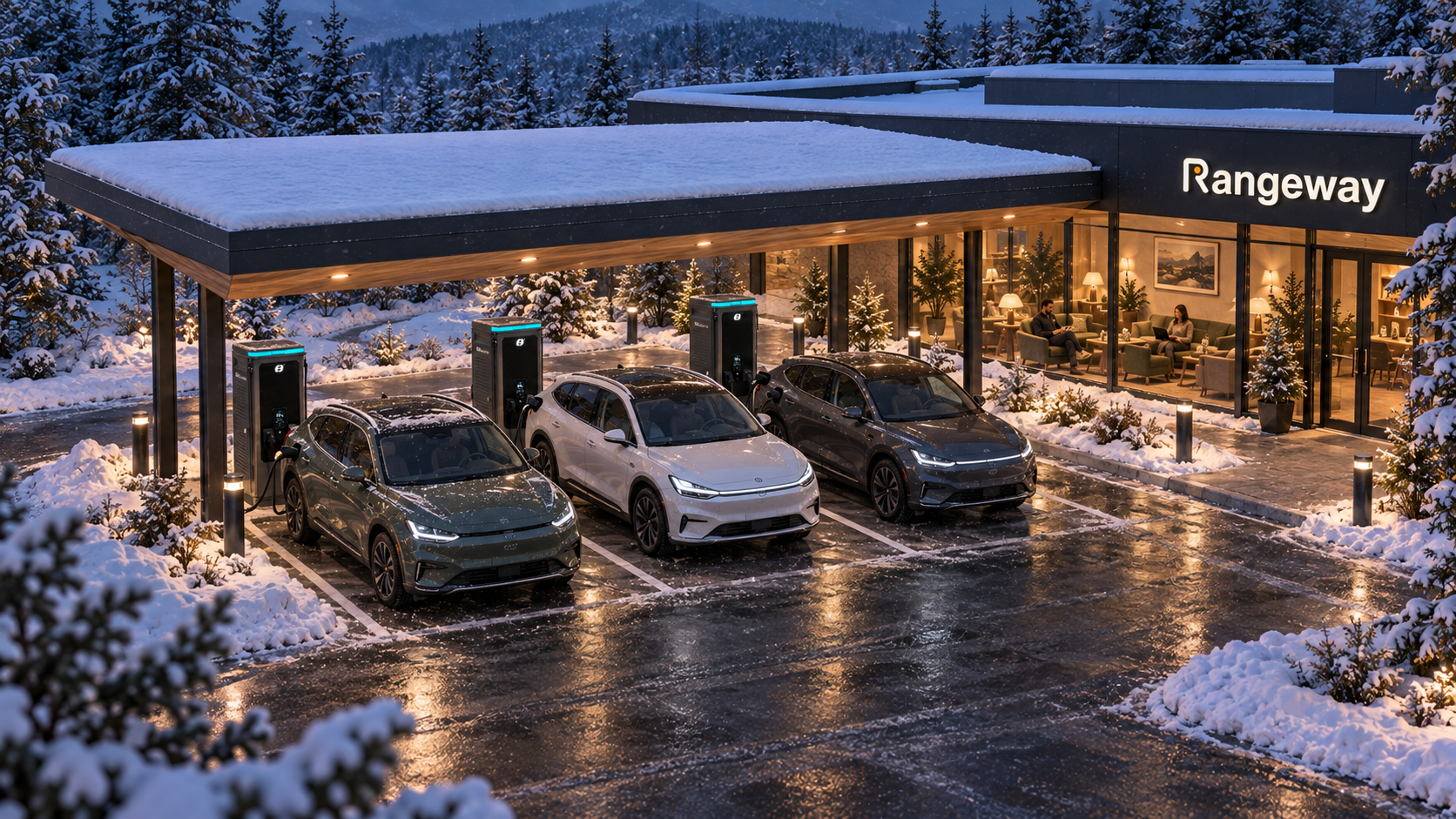
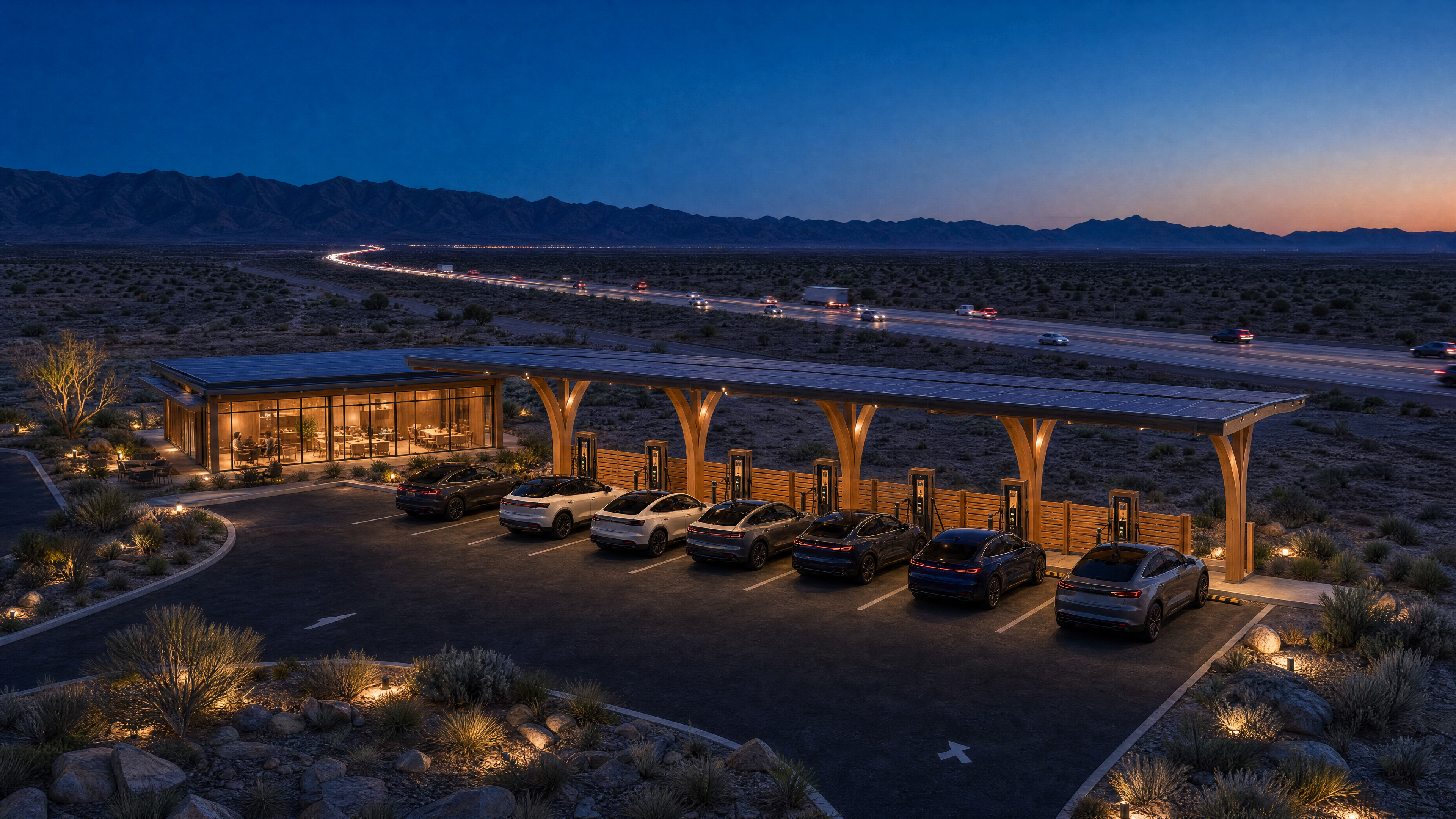
We started the Rangeway EV Driver Study with a straightforward question: when the basic charging experience is comparable, does the quality of the stop change where drivers choose to charge?
The answer was clear, but more nuanced than simply saying drivers want more amenities.
We received almost 100 responses from EV drivers, many of whom have significant experience using public fast charging on longer trips. When charging reliability, speed, price, and total route time were held comparable, more than nine in ten respondents said they would be likely to choose the hospitality-focused charging stop.
That is a strong preference. It is also only part of the story.
Charging fundamentals still come first
Reliability and charging speed were the two most frequently selected factors when respondents were forced to choose the three things that matter most at a charging stop.
Clean restroom availability followed closely behind.
This matters because hospitality cannot compensate for a charger that does not work, delivers less power than expected, or adds unnecessary time to a trip. A comfortable building beside unreliable charging is not a better charging experience.
The charging has to work first.
Practical hospitality matters more than novelty
When respondents were asked which parts of the Rangeway concept would most increase their likelihood of choosing the location, restrooms, food and beverages, and a purpose-built charging environment led the responses.
Indoor seating, on-site staff, and workspace or Wi-Fi ranked lower.
That does not necessarily mean those features have no value. The question required respondents to prioritize a limited number of elements. The results tell us what they would protect first.
Drivers appear to value hospitality most when it solves practical problems: somewhere clean to use the restroom, something worthwhile to eat or drink, and a location designed around the charging stop rather than chargers added to the edge of an unrelated parking lot.
Better stops do not justify unlimited charging premiums
The study also tested whether drivers would pay more per kilowatt-hour for the better experience.
Many respondents accepted some additional cost, but most of that stated tolerance was modest. Interest dropped as the proposed premium increased.
That distinction is important.
A better experience may influence where someone chooses to stop without giving the charging operator permission to move significantly above the local market price. The value of hospitality may be better captured through food, beverage, retail, repeat visits, and stronger customer preference than through a large premium on electricity.
Drivers should not have to overpay for energy simply because a charging location provides a clean restroom.
Charging stops already create commercial activity
Most respondents reported spending money during their most recent qualifying charging stop. They also overwhelmingly reported returning to a charging location after having a positive experience there.
Neither result proves the economics of a particular site. The study did not measure actual transactions, traffic, charger utilization, or repeat visits.
It does suggest that charging stops are already commercial and behavioral events, not simply energy transactions.
Drivers have time to use. They make decisions about where to spend it, whether to spend money, and which locations they trust enough to use again.
What this means for Rangeway
The study did not tell us to build a lounge and assume people will come.
It reinforced a more disciplined operating model:
Get the charging right. Make the stop safe, clean, and useful. Provide amenities that match what drivers actually do while charging. Keep energy pricing competitive. Build locations people will intentionally choose again.
That is the standard Rangeway is working toward across our network.
This was Rangeway-sponsored market research using a voluntary convenience sample. It was not designed to represent every EV driver or prove demand for a particular site. We will use the findings alongside corridor traffic, existing charging performance, competitor pricing, utility capacity, and site-level underwriting as we continue developing the network.
Thank you to everyone who participated and took the time to explain what makes a charging stop worth choosing.