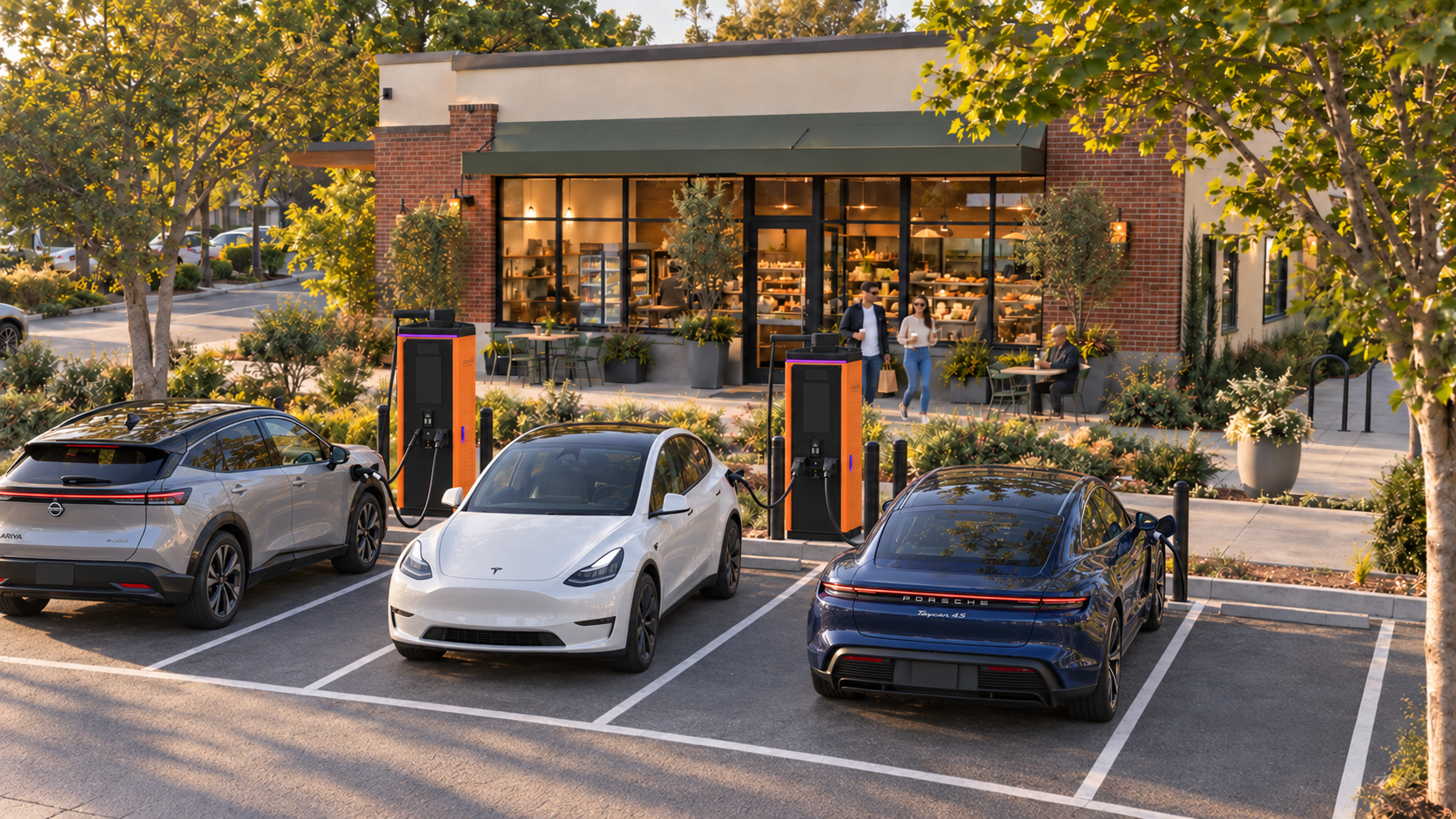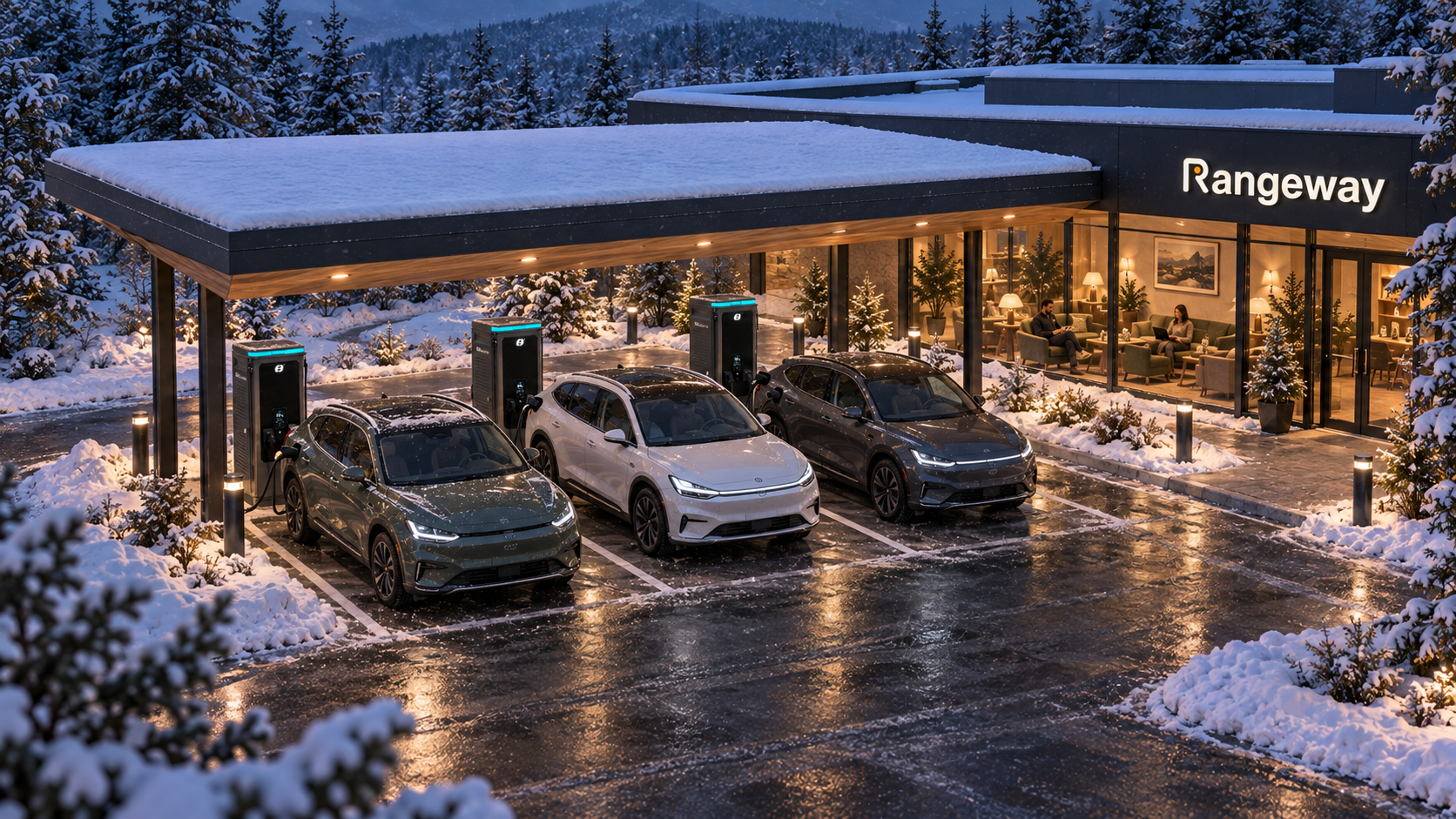
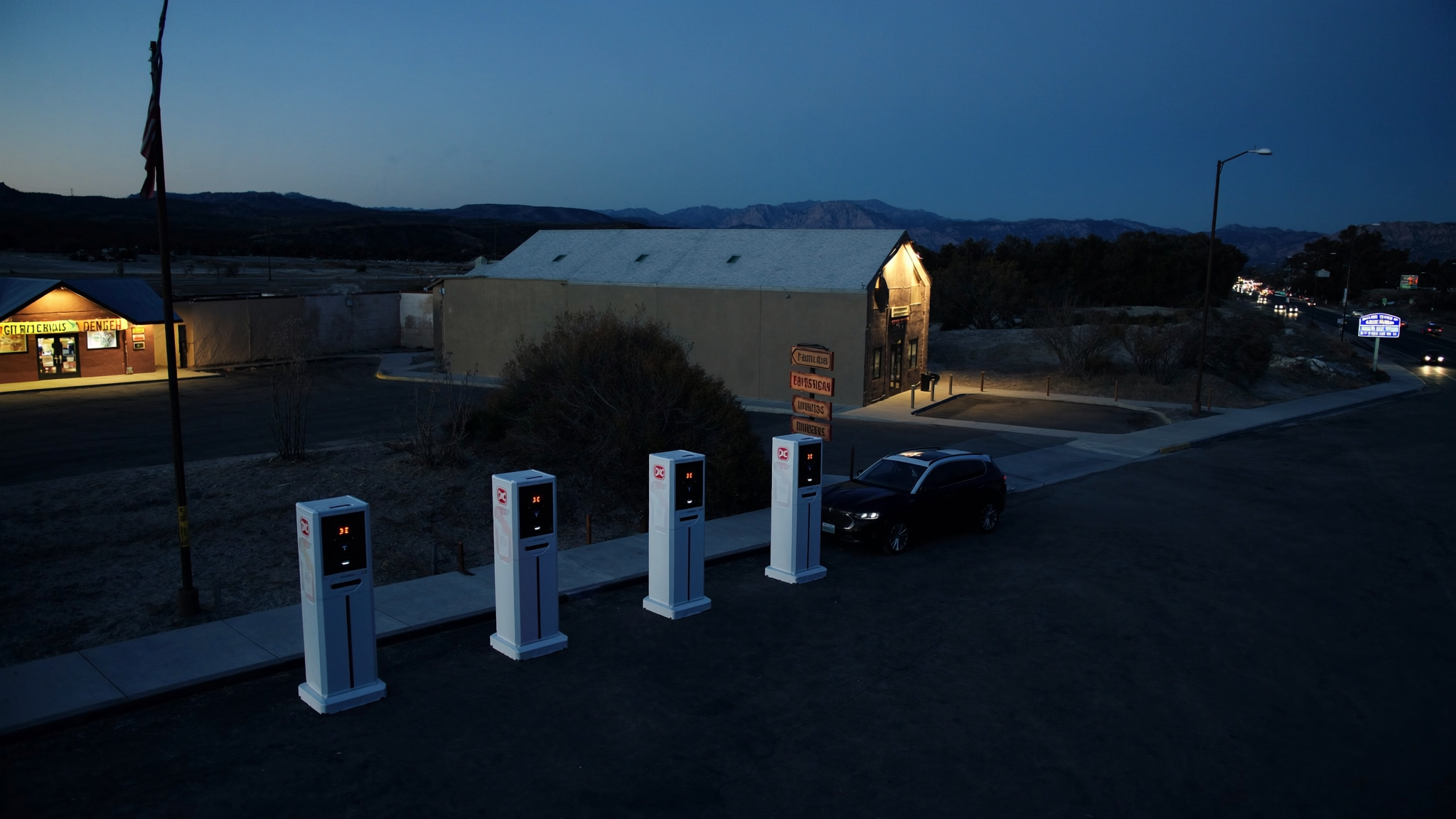
A charging station can satisfy every line of a grant checklist and still fail the driver who arrives after dark, needs a restroom, or discovers that the businesses counted as nearby amenities have already closed.
That is the flaw we need to address as the National Electric Vehicle Infrastructure program moves from deployment into long-term operation.
NEVI established an important national baseline: charging stations spaced along designated highway corridors, with at least four fast-charging ports capable of delivering 150 kW simultaneously. That floor helped bring infrastructure to routes where private investment alone might not have arrived soon enough. It gave states a framework, gave operators a reason to pursue difficult locations, and began closing meaningful gaps in the national charging network. California Energy Commission
The problem arises when the minimum becomes the finished product.
The rules shape what gets built
This is not an indictment of the charging operators pursuing NEVI funding.
Operators respond rationally to the requirements, economics, and competitive process established by the program. If an application can qualify with four ports, 150 kW of simultaneous power, and nearby amenities provided by an existing site host, there is a powerful incentive to design around those requirements.
That is especially true when grant competitions reward lower costs.
California’s current NEVI solicitation includes thoughtful criteria covering customer experience, nearby amenities, lighting, shelter, operations, maintenance, host training, and restroom access. The program clearly recognizes that a charging station is more than a collection of dispensers.
However, once an application clears the required technical score, California ranks qualifying projects by ascending cost per charging port. That creates a structural tension. Applicants are asked to provide a strong experience, but they are also rewarded for delivering each compliant port as cheaply as possible. California Energy Commission solicitation manual
The result can be a station that meets the program standard without becoming a place drivers would deliberately choose to stop.
A charger can be open while the stop is effectively closed
The EVgo station at King City Town Square in California helped crystallize this distinction for us.
The chargers are publicly accessible around the clock. The site is in the downtown area behind the community center. During our visit, however, reaching anything that meaningfully resembled a traveler amenity required roughly a ten-minute walk.
During the day, that is inconvenient. After dark, it becomes a question of personal comfort and safety. A driver may decide to remain in the vehicle for the entire charging session rather than walk through an unfamiliar area looking for an open restroom, food, or somewhere comfortable to wait.
The charger may technically be available 24 hours a day. The charging experience is not. EVgo station listing
A better stop does not always require constructing a dedicated driver’s lounge. Existing businesses can provide an excellent experience when the location and operating hours work.
The Skycharger and Electric Era station in Williams, California offers a useful counterexample. It is directly off Interstate 5 at an existing fuel and convenience stop, with a McDonald’s next door and additional coffee options within walking distance. Drivers can charge, use a restroom, buy food, or get coffee without turning the session into an expedition. Electric Era and Skycharger
That is what corridor infrastructure should accomplish. It should place charging where travelers already have a reason to stop, then make that stop reliable and convenient.
The 150 kW floor is no longer an ambitious target
The 150 kW NEVI requirement was a meaningful baseline when the program was created. It should not remain the industry’s long-term design target.
Road-trip charging is not generally a theoretical zero-to-100-percent exercise. Drivers typically need enough energy to reach the next stop, often charging through a portion of the battery where many newer EVs can accept more than 150 kW.
Designing around 150 kW can therefore limit the vehicles capable of charging faster precisely when speed matters most.
We believe 180 to 240 kW per active vehicle is a more appropriate planning baseline for the next generation of corridor sites. Intelligent power sharing is perfectly reasonable. Most sites do not have every port occupied and pulling maximum power simultaneously.
The objective should be to deliver strong real-world charging performance during normal operating conditions, not merely to demonstrate that each port can satisfy the minimum specification.
Construction is the beginning of the obligation
A successful NEVI program cannot be measured by the number of ribbon cuttings or dots added to a map.
The meaningful measures begin after the station opens:
- Are the chargers available when drivers arrive?
- Are faults identified and repaired quickly?
- Is the location actually being used?
- Are the amenities accessible during normal travel hours?
- Does the site expand when utilization demonstrates additional demand?
California’s current requirements call for more than 97 percent average annual uptime per port and at least five years of operation. Those are appropriate expectations. They only protect drivers, however, when performance is consistently measured, reported, and enforced. California Energy Commission
The Nevada Electric Highway provides a warning about the difference between building a corridor network and sustaining one. Stations were deployed across remote routes, but subsequent field reporting documented widespread outages and locations that were unusable when drivers reached them. A charging network that exists on a planning map but cannot be trusted in the field does not provide transportation infrastructure. Nevada Governor’s Office of Energy, FOX5 Las Vegas
Public funding agreements should include meaningful performance enforcement. That could include holding back part of an award until a station demonstrates sustained operation, requiring expansion planning when utilization reaches defined thresholds, and recovering funds when an operator repeatedly fails to maintain the required service during the reporting period.
The purpose is not to punish operators for occasional equipment failures. Every infrastructure system experiences faults. The purpose is to make long-term stewardship as important as initial construction.
How Rangeway approaches the same problem
Rangeway is not building its business around the availability of NEVI funding.
If we develop a qualifying project in an eligible area, we would certainly evaluate the program. The project itself, however, must make sense without the grant. Public funding should strengthen a viable charging destination, not define the minimum product we are willing to build.
Our current approach includes 400 kW-class charging hardware, solar generation, battery storage, and amenities that remain available around the clock. Those amenities may be automated at a Waystation or staffed as part of a Basecamp, depending on the location and the needs of the corridor.
More importantly, we begin with the stop itself.
Is there enough traffic moving through the area? Do those travelers need to charge? Is this somewhere people would reasonably choose to stop? Can the site remain comfortable, safe, and useful throughout the day and night? Can the equipment be maintained? Can the site expand if demand materializes?
Those questions should come before the grant application.
We are not suggesting that every NEVI operator needs to build a Rangeway location. We are not arguing that every charging station requires a dedicated lounge, restaurant, or staffed building.
We are arguing that four chargers and a nearby restroom should be treated as the starting point, not the definition of success.
NEVI has helped establish the foundation of a national charging network. Its next phase should reward the operators that create places drivers can trust, maintain those places after construction, and improve them as demand grows.
The operators are building within the system they were given. If we want a better charging network, the program must make the best experience the most rational thing to build.