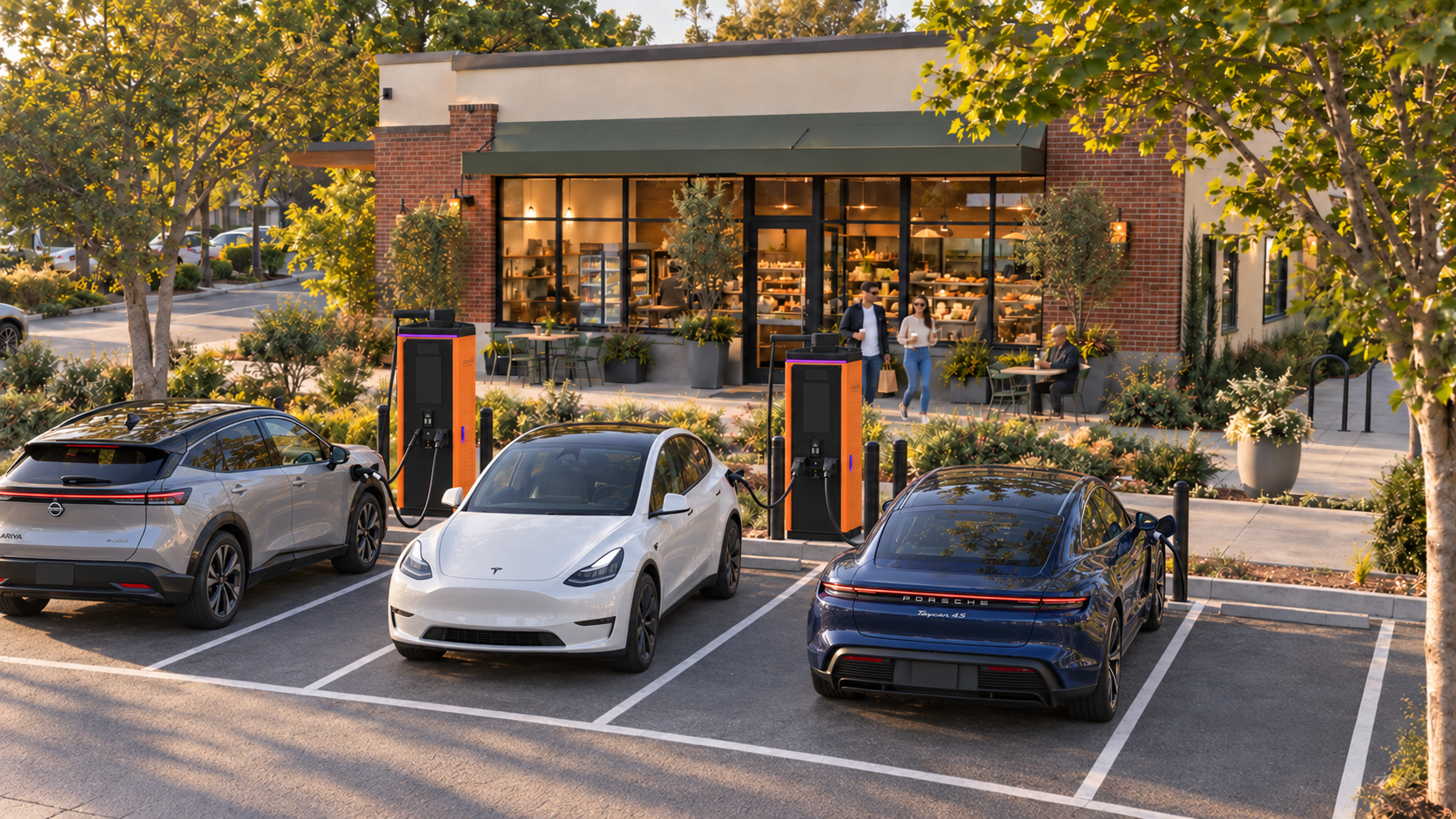
A recent episode of the Future of Convenience podcast opened with a challenge. After Electrify America hosted its first Reddit AMA, a follower dared the company’s senior director of sales, marketing, and business development, Rachel Moses, to take a long road trip using nothing but her own network. She accepted. Her own CEO had driven the network across the country a couple of years earlier, so she chose to do something different and ran the East Coast instead, from Portland, Maine to the Florida Keys, a route built to mirror the Snowbird drivers who make that journey every year.
What is striking is the story she came back with. She expected the conversation to be about chargers. Instead, she kept returning to the breaks. Route planning, she said, turned out to be the easiest part of the whole trip. The chargers were wherever she and her colleagues needed them, so they chose their stops around the cities they wanted to see and the people they wanted to pick up along the way, not around where the charging happened to be. The charging simply receded. As she put it, “the charging is just in the background.”
The details she remembered were the human ones: a restroom at the right moment, coffee, a long-awaited hot dog at a Costco the team had been looking forward to all day. The charging, in her telling, was the easiest and least memorable part of the entire trip. The thing she actually complained about was the driving. Everything that happened while the car was plugged in was the part worth remembering.
The hosts picked up that thread with a number worth sitting with. By one travel-plaza operator’s count, roughly four out of five highway stops are made for a single reason, the restroom. People do not leave the highway to admire the equipment. They leave because they need something, and the quality of the place they find waiting is what they carry with them down the road.
From there the conversation turned to where the whole industry is heading. Co-host Dan Munford, drawing on years of watching the European market mature, traced a familiar arc. First comes the race to put a network on the ground, because without chargers nothing else matters. Then comes the pressure to make that network profitable, because infrastructure that does not earn its keep does not get built twice. Then comes the stage the most mature markets are living in now, where the charging is only one of several reasons to pull in, alongside the restroom, the food and the coffee, a few minutes of comfort, even a place to walk the dog. The destinations that combine those things are the ones drivers choose, and they are the ones that perform.
Moses was candid about how Electrify America has approached this. From its earliest days, the company located its investments deliberately alongside strong amenities, because charging on its own was never the real draw. Where a site lacked something as basic as good lighting, the company brought the lighting in. That instinct is the right one. The harder question is what happens on the long stretches of road where strong amenities are not already sitting there to build around, which is exactly where a tired driver needs a good stop the most.
One of the hosts, an EV owner herself, described what that looks like from the driver’s seat. On her drives through rural Virginia she plans the route around the handful of chargers that exist, knowing exactly which one she will use and at what point in the trip, because once she leaves the larger cities there is nothing for a long stretch. The map fills in around the metros and thins out everywhere else. That gap is not an edge case. It is the everyday reality on the roads between destinations, and it is precisely where a dependable, comfortable stop is both rarest and most valued.
She was just as honest about the friction that remains. Range anxiety, she said, has largely faded, and the heavy investment networks have poured into reliability has taken much of the worry out of whether a charger will simply work. What is left is the human moment at the very start. A first-time driver standing at a charger, unsure which app or card or method to use, is now the source of most of the calls their support team fields. The answer the industry has settled on is a phone number to call. That is a reasonable answer. It is also a quiet admission that the most human part of the experience is still the part that needs the most help.
The conversation also turned to who is responsible when a driver needs that help. Moses described a business many networks now run, where retailers and convenience operators own and operate the chargers under their own branding while the network supports them from behind the scenes. Munford added a sharp observation from the European market. The store team rarely treats the chargers as their problem, yet the driver always does. Whoever’s name is on the equipment is who the driver holds accountable for the experience, fair or not. The takeaway is hard to miss. The experience belongs to whoever the driver believes owns it, which makes owning it on purpose the only reliable way to shape it.
This is the conversation Rangeway has been having from day one.
We think like hotel operators, not utility companies. We start from the belief that the moment a driver leaves the highway is a moment of hospitality, not a transaction. The charging should be fast and reliable, and then it should fade into the background, exactly as Moses described. What stays with a guest is the comfort around it.
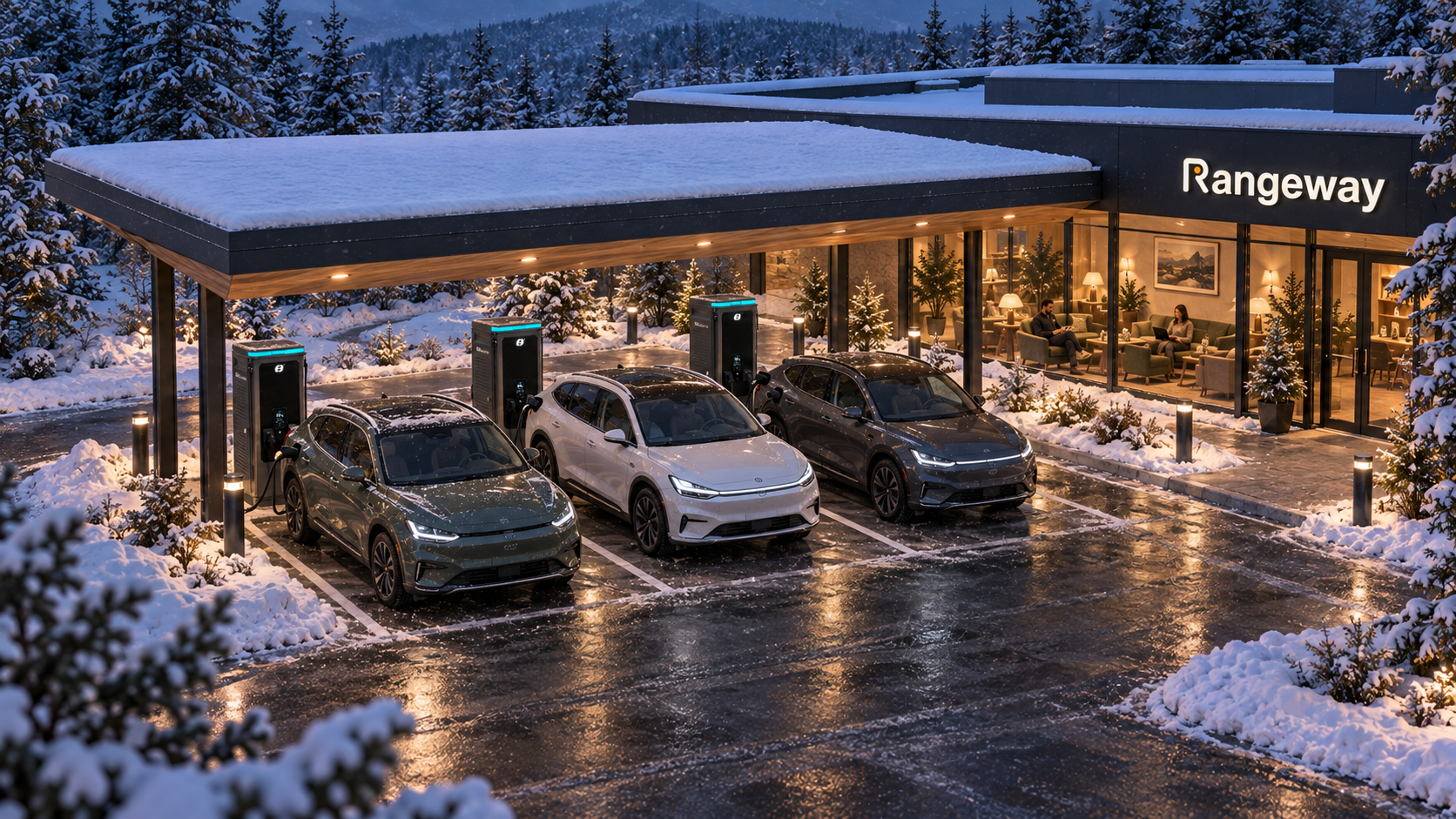
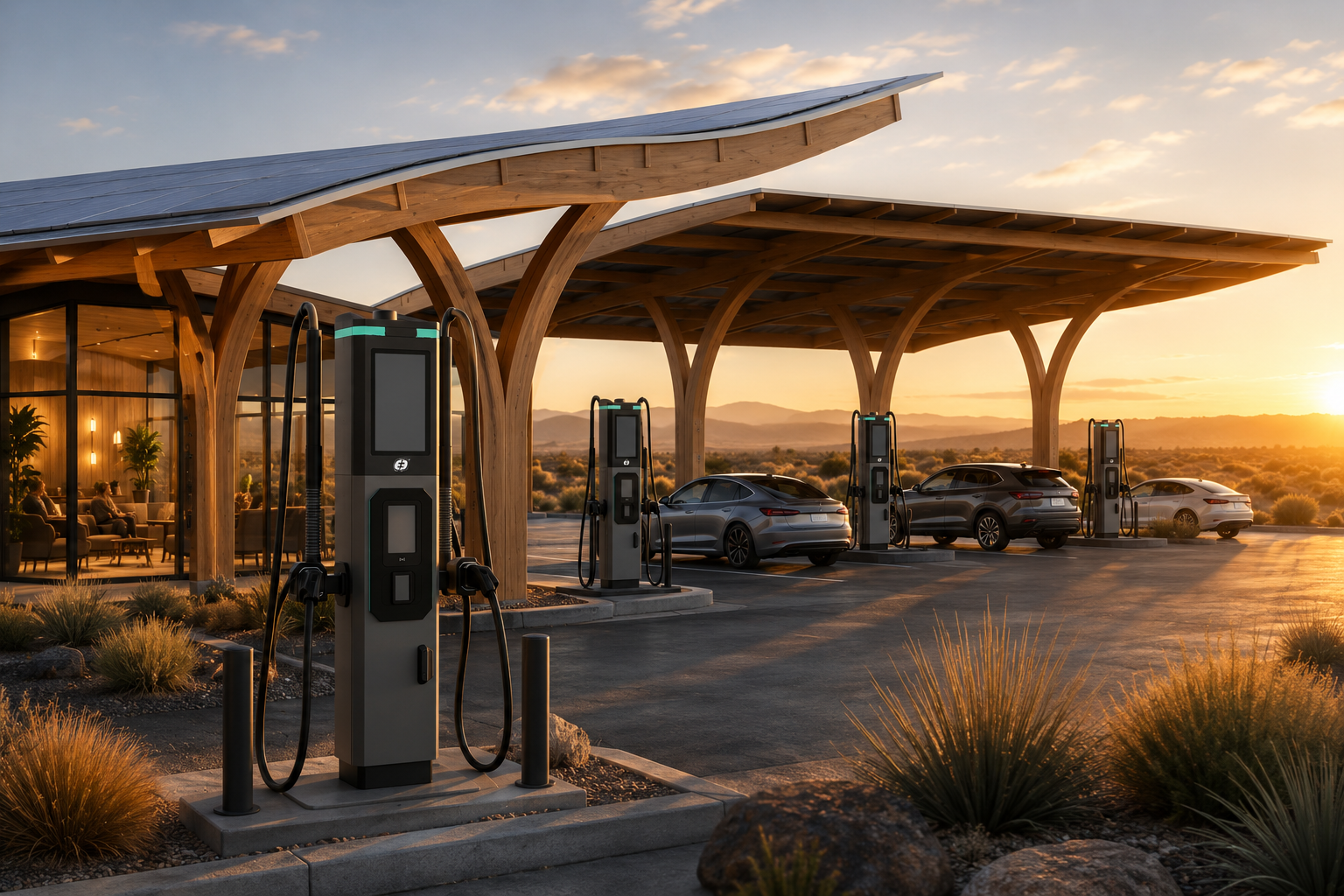
At a Rangeway Waystation or Basecamp, that comfort waits inside. A climate-controlled driver’s lounge offers premium restrooms, comfortable seating, good coffee, and high-speed Wi-Fi, looked after by hospitality-trained Trailkeepers who are there when a driver has a question. The difference is ownership. We do not borrow the experience from whatever sits next door, and we do not hand it to a host to run on the side. We build it ourselves, so it holds to the same standard at every location. That consistency matters most on the rural and underserved routes where a good stop is hardest to find, the very places the map tends to leave blank.
By the end of the episode, Moses made one more point that stuck. The charging never felt like an interruption. Every time they stopped, it was because they wanted a break, a meal, or a few minutes out of the car, and the charging simply happened alongside it. That is the whole idea. The maturity arc Munford described is real, and the place it leads is the one we started from. The charging is the background. The work worth doing is making everything in the foreground worth the stop.
Learn more about what we are building at rangeway.co.