Every so often the people who spend the most time on the public charging network say the quiet part out loud. On a recent episode of Coast to Coast EVs, host Steve Birkett sat down with longtime EV drivers and charging reviewers Walter Schulze, Eric Way, and Jay Williams (WisconsEV) to work through a deceptively simple question. What actually makes a charging stop worth taking? They spent close to two hours on it. The conversation ranged across site types, hardware, regional differences, and the messy reality of what counts as a public charger. Their conclusions read less like an engineering spec and more like a hotel operator’s checklist.
The charge is the excuse. The stop is the reason.
The most honest moment came from Eric. He said the single most important amenity at a charging location, after the charger itself, is a clean and open restroom. More than that, he admitted he often pulls in to charge not because the battery demands it, but because he needs a genuinely good place to stop, and the charge becomes the convenient excuse to take one. The charge is the reason on paper. The stop is the reason in practice.
Sit with that for a moment, because it inverts how most of the industry talks about itself. The prevailing assumption is that charging is a chore to be minimized, a necessary pause measured in kilowatts and minutes. What Eric described is the opposite. The pause is the point. The energy is simply what justifies it. That is the entire thesis of hospitality-driven charging, stated plainly by a driver who has seen the network at its best and its worst.
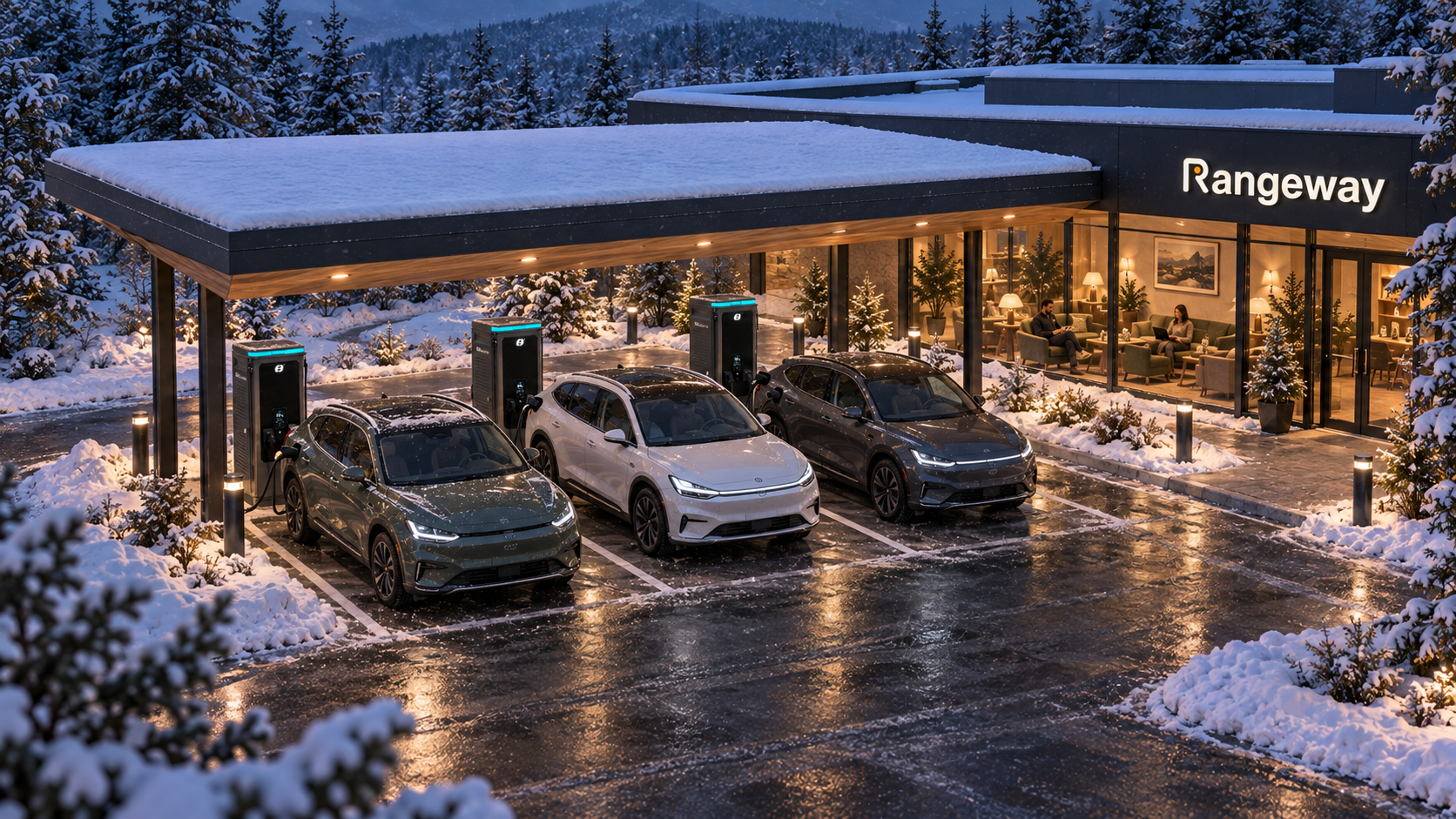
Jay added something just as telling. He praised the rare locations that offer real indoor seating, because they mean you are not stuck sitting in your car burning range to stay warm while you wait out a session in winter. That sounds like a small thing. It is not. A driver who has to idle the climate control to stay comfortable is paying twice, once for the charge and once for the wait. A driver who can step into a warm, welcoming space is being given something instead of having something taken. It is the difference between enduring a stop and enjoying one, and it is exactly the gap our indoor comfort guarantee was built to close.
Charging out of obligation is not the same as being welcomed.
A theme ran underneath much of the episode, even when no one named it directly. So much of today’s charging happens not because a driver chose a place, but because it was the only place. The hosts spent real time on how often the most available option in a given town is a dealership charger, used out of necessity rather than preference, sometimes gated, sometimes restricted to a single brand, sometimes simply unloved. Drivers tolerate these stops. They do not look forward to them.
Jay coined a phrase for the locations that look like charging but barely deliver it: public in name only. Plenty of chargers exist on a map yet sit behind restrictions, conditions, slow hardware, or simple neglect. Eric took it further, arguing that a true public charger should ask nothing of you beyond the willingness to pay for the energy. By that standard, a surprising share of the network falls short. Presence is not hospitality. A pin on a map is not a welcome.
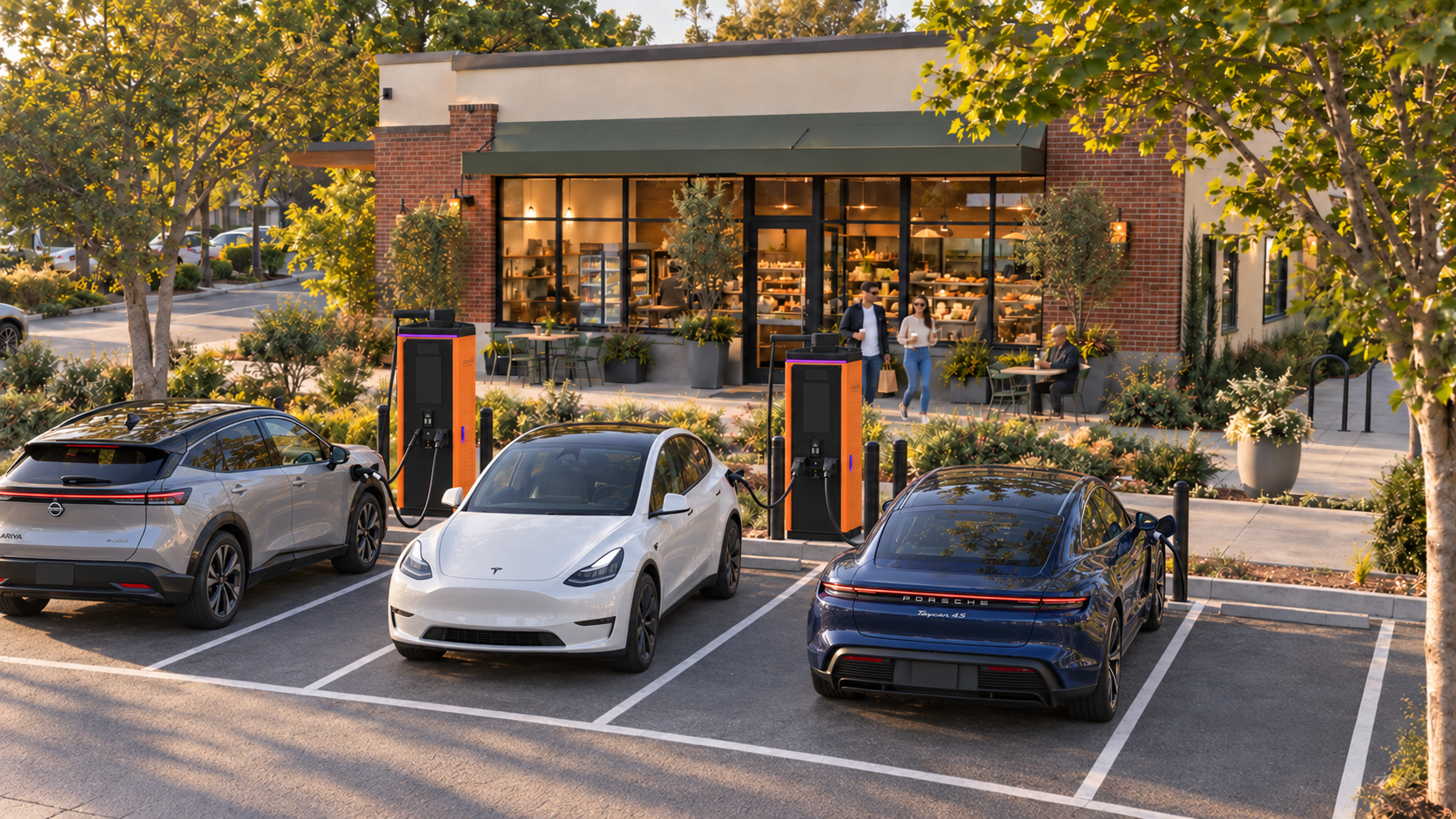
This is the distinction we have organized an entire company around. There is a meaningful difference between a place that technically allows you to charge and a place that was designed for you to want to stop. The first treats the driver as a load on the grid. The second treats the driver as a guest. We are unapologetically building the second kind.
A mature market stops charging out of necessity and starts choosing where to stop.
One of the sharper observations in the episode was about how charging changes as a region matures. In the earliest markets, drivers take whatever is available, which is why dealership charging dominates so much of the country by sheer count. In the most mature markets, that pattern flips. Drivers begin charging at the places they already want to be, the retail centers, the cafes, the destinations, because the network has finally caught up to the idea that the location matters as much as the electrons.
That progression is the whole road map. The future of charging is not more reluctant chargers bolted onto the back of a parking lot. It is charging woven into places people genuinely choose. The hosts were watching that maturity curve play out across the map. We are building for the destination it points toward.
The group also pushed back, together, on the idea that the future is a handful of enormous showpiece locations. Eric made the point that a large, centrally located site is wonderful if you have a dense population of EVs nearby, but it does very little when the real problem is covering distance between towns. Jay agreed, arguing that what most communities need is more four to ten charger locations spread thoughtfully along a route, not one massive hub sitting a long detour away. A journey is a series of real places. The network that serves it best is the one that shows up in all of them with the same standard. Walter noted that the operators raising the bar with thoughtful, amenity-rich locations are quietly changing what every driver expects everywhere else. We agree. Renders are easy. Execution is the moat.
The overnight stop deserves better than an afterthought.
The conversation even reached the overnight stop, where charging is too often added to a hotel parking lot as an afterthought, slow and unreliable and easy to forget. The hosts were candid that much of the lodging charging out there is hard to love. A driver arrives tired, plugs into something that may or may not work, and hopes for the best by morning.
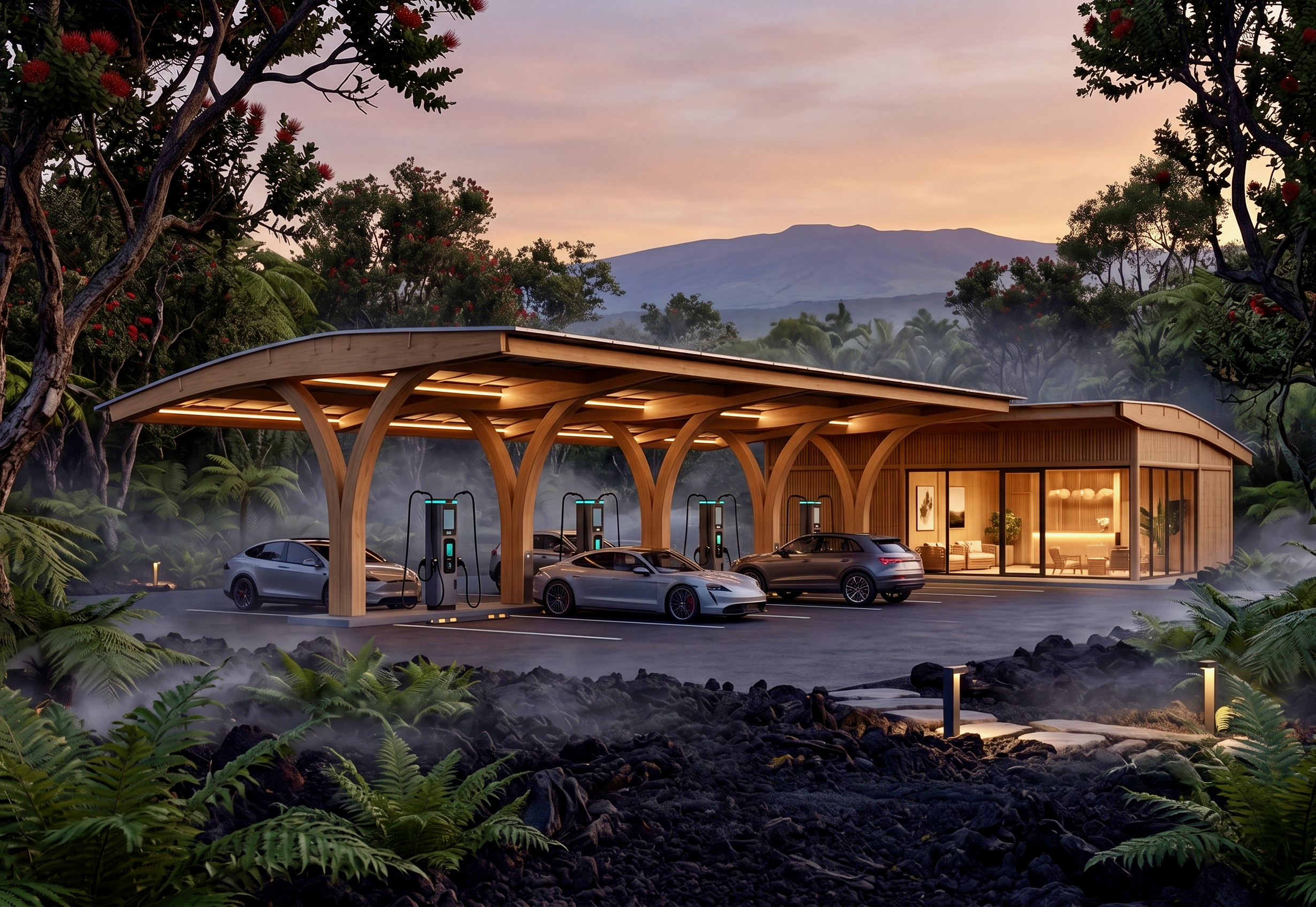
We see that differently. The overnight stop is not a problem to be solved with one more parking-lot charger. It is an opportunity to make the stay itself the destination. At a Summit, off-grid solar charging is woven into the experience rather than parked beside it, and the night becomes part of the journey rather than an interruption to it. The same instinct that makes a clean restroom matter at a Trailhead is the instinct that makes a Summit feel like somewhere you would choose to spend the night.
What the drivers were really saying.
None of this is new to us. It is the reason we built Rangeway to think like hotel operators rather than utility companies. The indoor comfort guarantee at our Waystations and Basecamps, the welcome that begins at every Trailhead, the overnight experience of a Summit. They all answer the same truth that Eric, Jay, and Walter circled for two hours without quite naming it.
The charge gets you down the road. The stop is what you remember. The companies that understand that difference will define the next decade of this industry, and the ones that keep treating the stop as a delay will spend that decade wondering why drivers never came back.
That is the whole idea. Travel farther, stop better. Make every moment worth the stop.